Showing posts with label Little Brown Books. Show all posts

Friday, February 10, 2023

Top Nonfiction Read in 2022

Today I am looking at the top nonfiction books I read in 2022. These are not necessarily books published in 2022. According to my end of year reading list and report, I read 42 nonfiction books. Out of those, I have eight books that I rated either four or five stars out of five stars that I am sharing now. If I have a review posted for the book, I am including the link. The list is in no particular order. 


Giuliani: the Rise and Tragic Fall of America's Mayor.


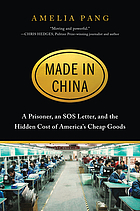
Made in China: a Prisoner, an S.O.S. Letter, and the Hidden Cost of America's Cheap Goods.


From my review: "This is a moving book that draws you in. It tugs at the heart at times. I will add it may not be for some sensitive readers, but I think as many people as possible need to read it, more so if it makes them uncomfortable."


 The Playbook: How to Deny Science, Sell Lies, and Make a Killing in the Corporate World.


 Gangsters Vs. Nazis: How Jewish Mobsters Battled Nazis in Wartime America.


From my review: "This is a book about a part of U.S. history that few people may know about. Yes, the U.S. had a Nazi past (you could argue it still does have a Nazi and fascist present), which many in the U.S. often ignore. Thus this is a must read. It is a book that reveals a part of U.S. history mostly forgotten until now."


 The King of Confidence: a Tale of Utopian Dreamers, Frontier Schemers, True Believers, False Prophets, and the Murder of an American Monarch.


From my review: "This book is not just a biography. It is a well written history of the United States at the time through the lens of James Strang's life. You are bound to learn new things and/or see them in a different light from reading this book."


 The Library: a Fragile History.

From my review: "This book aims to be a history of libraries from antiquity to the modern era. It is not just about libraries. It is also about books, collectors, book sellers, a lot of wealthy people, and folks who had the title of librarian, whether they deserved it or not."


 Star Wars Year by Year: a Visual History.

From my review: "This is another excellent coffee table book from DK Publishing.  The book looks at the history of Star Wars from it development in the 1960s to The Mandalorian. It covers from 1914-1972, before Star Wars, to 2021. "


 Allow Me to Retort: a Black Guy's Guide to the Constitution.

 From my review: "If you are stuck having to argue with some Republican/conservative about the 'greatness' of the document, this book explains exactly why they are wrong most if not all of the time. So read this book and keep it handy. "


Wednesday, July 06, 2022

Book Review: The King of Confidence

 
Genre: biography, U.S. history
Subgenre: crime, cons, antebellum United States
Format: e-book galley
Source: NetGalley

 
This is the story of James Strang, probably one of the greatest American confidence men, or con men, that you may not have heard of.  Strang basically formed a cult, an offshoot of the Mormons, made his base in a small island in the Great Lakes with a few followers, and then declared himself Prophet of God and King. That is a very basic summary. The man held various jobs, often transformed himself from one con to the next, and was even a Michigan state legislator for a time. He was a con man at a time when con men were rising in the United States during the antebellum period. Antebellum United States was a volatile time, but it was also a time of innovations as well as risks and rule breaking. As the author writes, "the mid-nineteenth century was a time when everything-- even time itself-- seemed indeterminate, malleable, open to new rules" (13). James Strang took full advantage. 

For starters, we get Strang's story from his rise to his death. Though this is a modern book, in some ways the narrative reads like a mid-nineteenth century novel written by someone like Hawthorne or Melville, authors who were active at the time. This makes the story a bit more immersive for readers. It is also an engaging story that one just keeps on reading. 

A strength of the book is that it gives a broad and detailed picture of antebellum United States. The author tells us about the many events going on at the time as well as various personalities who were active at the time. To give readers an idea, here is a very small list of some of the people and things going on at the time, in no specific order: 
 
  • Daguerre was inventing the "power to freeze time" (that would lead to photography). 
  • Samuel F.B. Morse and the telegraph (1844).
  • Alexis de Tocqueville was visiting the U.S. (1831).
  • So did Charles Dickens at one point.
  • The Mexican-American War (1848).
  • Herman Melville writes the book The Confidence Man. 
  • P.T. Barnum in 1842 introduces General Tom Thumb to the world.
     
For me, such details made the story more interesting and helped me to visualize the era better. This book is not just a biography. It is a well written history of the United States at the time through the lens of James Strang's life. You are bound to learn new things and/or see them in a different light from reading this book.
 
 In addition, it is a well researched and documented book. The author often uses primary sources to help tell the story. Some of those newspaper clips can be quite interesting on their own. The book features as well a pretty extensive set of notes at the end and a bibliography. 

Overall, I really liked this book. It was an interesting read about a chapter of United States history I do not know about until now. Though it can feel a bit lengthy in the middle-- the pace slows a bit-- all in all it is a good read. I am sure with a bit of editing this story could be a movie on one of the streaming services. 

I'd recommend this book for public and academic libraries, especially for readers who enjoy historical biographies, U.S. history, and books about crimes and cons. We already bought a copy at our library. 

4 out of 5 stars

* * * * * 
 
Additional reading notes: 
 
Defining confidence in the mid-nineteenth century: 
 
"And in those days before electrical power, confidence is what made antebellum America hum. Confidence was black magic, good fortune, and hard cash combined. Confidence could turn worthless paper into glittering gold, cow towns into cities, empty lots into bustling businesses, losers into winners, paupers into millionaires. Confidence was a charm deployed by bankers and merchants, philosophers and politicians, clergymen and card sharps alike" (18). 
 
Confidence could make one a fortune, but it could also get one in trouble. In addition, 
 
"But the antebellum era was full of figures with a special gift for slipping back and forth between disrepute and respectability" (31). 
 
Historically, Americans are very susceptible to swindlers who look good and sound like good business men, even if those men are not the real deal. Today, this could explain the rise of Donald Trump. Charles Dickens, on visiting the United States, noticed it and wrote on it: 
 
"Dickens was surprised to discover that those responsible for the scheme, instead of being condemned by the public, received only praise. He attributed this fact to a strange American 'love of 'smart' dealing: which gilds over many a swindle and gross breach of trust. . .and enables many a knave to hold his head up with the best'" (52). 

This love of "smart" remains today, though "smart" is clearly relative to put it mildly. 

That love of "smart" men and scoundrels can also apply to Strang's appeal: 

"No doubt this same love of scoundrels accounted for some of Strang's appeal. In the anxious climate of antebellum America, where a sense of powerlessness ran as rampant as typhoid fever, people were drawn to those who succeeded at writing their own rules, inventing their own truths" (54). 

Some books from the bibliography for the TBR list: 


* * * * *

This book qualifies for the following 2022 Reading Challenge: 


Friday, March 04, 2016

Book Review: The Bookshop Book

Jen Campbell, The Bookshop Book. London: Constable and Robinson, 2014. ISBN: 978-1-47211-666-6.

Genre: nonfiction
Subgenre: books and reading, bibliophiles, travel
Format: hardcover
Source: Hutchins Library, Berea College


This was a good read. I will admit I read most of it, and I did skim a few parts as some parts of the book were more interesting than others. I am always up for reading books about books and reading, and this fit the bill nicely. In essence, the book is a sort of list or directory of special or unique bookstores around the world. Some regions do have more bookshops and are better represented than others. Europe is extremely well represented, so is North America, the rest of the world not so much.

The book offers as way of introduction a small history on the world of books, which serves to set up the rest of the book. The rest of the book then covers "bookshops around the world & thoughts from those who love them." In the directory section, the following areas are covered:

  • Europe
  • Africa
  • North America
  • Central and South America
  • Australasia
  • Asia
For access purposes, the book features an index of bookshops and another index of people.

The author has worked for seven years in bookshops in England and Scotland; this may explain some of the heavier emphasis on those countries and Europe. It's what the author really knows. Bookshops featured in the book are usually independent, often second-hand and/or antiquarian. Many of them are the kind of places I would love to just lose myself in for a while. Each bookstore gets an entry which can vary in length from a paragraph to various pages. This does mean that you learn a lot about some places and very little about others. Also, each regional section features "Bookish Facts" and "Some Wonderful Things," which are boxes with book trivia and lore. Additionally, there are also sections of chats with authors, mainly literary type authors, who give their thoughts on bookshops and their reading experiences.

Overall, this was an enjoyable book. For bibliophiles, this would be a comfort read. Armchair travelers who enjoy books and reading will likely enjoy this book as well. In the end, it's one I really liked.

4 out 5 stars.

* * * * * 

Some additional reading notes:

The author's motivation for the book:

"Stories connect people: I want to share the stories of three hundred wonderful bookshops across six continents, and thoughts from famous authors about their favourite bookshops, too. These days, we've got booksellers in cities, in deserts, and in the middle of a rain forest; we've got travelling bookshops, and bookshops underground. We've got bookshops in barns, in caravans, and in converted Victorian railway stations. We've even got booksellers selling books in the middle of a war" (xiv). 

Ian Rankin on why bookshops are important. His sentiment is one I agree with:

"As a reader, I think bookshops are important because nothing beats the experience of browsing. You cannot replicate it online. In a well-run bookshop you are always going to find something that you want to read. If not, hopefully you can chat with the bookseller and they will tell you about something you didn't know existed.  You get that personal recommendation.  You build up a relationship" (16). 

You know what other place also can offer good browsing and has knowledgeable people when it comes to books? Your local public library, and contrary to some of the newer librarians who think of exclusively online technotopias, many readers want and seek out books. But I digress.

Ali Smith on what bookshops are:

"A bookshop is a bookshop owner's vision, and book-lovers tend to share visions. At the end  of the day, it doesn't matter so much what publishers declare to be the latest trend, or what's going to win such-and-such an award that year. A bookshop's aim is the same as the reader's aim, and it isn't restricted to time: they help things stay steady, and balance everything out. All they want, all we want, is a good book" (63). 

James Daunt, of Daunt Books, on e-books:

"If you own something digital, you don't own a physical thing. I can see e-books replacing the paperback copies one might give away after a single read, but I still think that people like to own books-- physical books and beautiful objects-- and, because of that, good bookshops will stay" (92). 

Daunt on children and growing up a reader:

"If you fall in love with reading young, it's something that will stay with you throughout your whole life--you might not find yourself reading all the time, but you will always go through periods of wanting to be around books, and the worlds they offer" (92-93). 

Again, and not to take away from bookstores, but this is applicable to libraries as well who not only offer books for children but also do programs to engage children in reading. Many of those kids will grow up to use libraries, but they will also become book buyers. Perhaps bookshops should send us a thank-you note once in a while.

The passion of booksellers, which I would say is the passion of book readers as well:

"Our passion is in the word, the power of the word, its freedom and the ability of stories to take us to other places. To live many lives at once, as mindful reading allows" (156). 

Cliff McNish on secondhand bookshops, also why I like such stores so much:

"Is there anything better than entering a secondhand bookshop? Inexpensive books (good!), but also books you've never heard of, or barely heard of, by people who were writing in your genre, and your target age-category, just a generation or even half a generation ago, and have already been either completely or half-forgotten. There they are, in hardback and paperback, remembered. Honoured. Which, since we nearly all end up there eventually-- let's not pretend-- honours us all" (181). 

* * * * *

This book qualifies for the following 2016 Reading Challenges: