Showing posts with label Red Wheel/Weiser. Show all posts

Friday, June 05, 2026

Book Review: Tarot and the Psychology of the Soul

Mariana Louis, Tarot and the Psychology of the Soul: Exploring the Archetypal Mirrors of the Psyche. Newburyport, MA: Weiser Books, 2026. 9781578638787. 

Genre: Tarot
Subgenre: psychology, Jungian
Format: e-book galley
Source: Edelweiss Plus  

Book cover for Tarot and Psychology of the Soul. Title letters over a red ornate background
Recently finished this book, and if you are looking to do a deep dive into Tarot, this book is a good option. As I've written before, Tarot book authors usually have a method, lesson, plan, etc. to teach. This author's method is depth psychology and Jungian psychology. It explores the archetypes of Tarot in depth, and it provides material, exercises, and questions to aid your learning.

The book is organized in four parts with 13 chapters. Topics covered include archetypal methods and techniques, the Minor Arcana, the Major Arcana, and three Tarot spreads at the end of the book. 

The book as a whole is interesting, and the author does a pretty good job of explaining concepts. However, the text can still be a bit dense, so this may or not be a good book for beginners. I might not give this book to a beginner as their first Tarot book. However, if they've already read two or three beginner books, this book can be the next step up for beginners. For intermediate and advanced practitioners this book can be a good option. 

If your knowledge of depth psychology is limited, the author uses the first two chapters to explain the basics and give readers and overview. Author then starts with the Minor Arcana card by card, showing how the concepts of depth psychology apply and archetypes present. 

For each pip card we get a short essay on each card. We get upright and reversed meanings that draw strongly on archetypes and depth psychology. This may add a bit more insight or ideas to consider in your readings. Still,  if you read within Rider Waite Smith (RWS) tradition, there is enough material you will recognize. 

Major Arcana entries are similar; author divides them into four groups of archetypes: masculine and feminine, developing ego, encountering the shadow-- archetypes of descent, and approaching wholeness-- archetypes of transcendence. In this sequence, author places the Fool-0 at the end after the World-XXI. Some may or not agree with the placement, but I believe it deserves some consideration. 

 The author provides a card reading ritual later in the book. I thought it was very nice, but it is fairly complex. It may be a bit much for those of us who do a short daily ritual to reflect and get in touch with the Divine, or the Cosmic Joker in my case. Save this one for when you have some serious time to practice your cartomancy, and most likely for a private personal reading. 

The same applies to the three card spreads offered in the book. They are fairly complex, so good for in-depth work and reflection. They may be useful too for some shadow work. 

The book includes a bibliography. This can be helpful for further reading and research. Many of the works listed are by Jung or about Jung or related to Jung. For me, I may need to read a bit more by and about Jung works if for no other reason than to expand my learning and knowledge. Having said that, there are some works in the bibliography I have read that I may want to revisit. I may gain additional appreciation for this book if I revisit some of those books. 

Overall this is a solid and substantial book on Tarot. I read through it to review it, but it is one to revisit and reread. It lends itself well to studying individual Tarot cards and for inner work.

I do recommend it for libraries that collect esoteric materials. It is a book that I would buy a print copy for my personal collection. 

5 out of 5 stars. 

Additional reading notes: 

According the author, the only question we bring to the cards: 

"In my years of tarot teaching and counseling, I have come to learn that the only question we bring to the cards is the one I asked on that summertime evening: how am I meant to live? While the lure to glimpse what the future holds is undeniable, we don't really want to know what's going to happen as much as we want to know what promise we hold and how to meet it" (3). 

This reminds me a bit of doing reference interviews when a patron asks a question but that may not be the question they really want, and it falls to a librarian like me to help them express the real question and then find the answer. By the way, this is not first time cartomancy has reminded me of this process. I may need to think about it and write a bit more about it down the road. 


An author observation and warning: 

"There is a tendency in our contemporary world to self-pathologize and self-therapize, which can be misguided and even psychologically dangerous" (9). 

That is a statement that is bound to piss off a few people on social media, including the anti-psychology crowd, but it is fair to say not every is nor needs to be a diagnosis. However, 

"If we are thoughtful and conscientious about our approach, however, we can use these depth psychology principles to support and guide our own intuitive and therapeutic self-inquiry" (9). 


The author defines divining: 

"The act of divining is not so much seeing what has not yet come to pass as it is peering into the unknown with god-blessed vision, uncovering what is hidden or obscure from mortal sight" (10). 

The author argues that rather than divination Tarot is or should be a tool of individuation. A bit on what it is: 

"In the work of individuation we are become who we most authentically are; we are becoming whole. It is the effort of embracing our extraordinary multiplicity and complexity, accepting and appreciating it all profoundly, and integrating it into a unified, centered experience of selfhood" (11). 


Aim of the book: 

The aim of this book is to act as a guide into greater self-knowledge via the cards, not as a manual for how the cards can fix your life nor as a quick dose of someone else's interpretive wisdom to stand in for your own. Its true purpose is to guide you both toward a deeper relationship with the tarot and toward a deeper relationship with yourself" (14). 


On journaling. I always take it as a good sign when an author encourages journaling: 

"You may also want to start a tarot journal in which you record your reflections. You might begin your entries by referencing a guidebook or jotting down some meanings, but the purpose of a tarot journal is to process and record your personal, intuitive reactions. Engaging the card at this level will automatically encourage greater intimacy with it" (37). 


Some books from the bibliography I'd like to read: 


Book qualifies for the following 2026 Reading Challenge: 

Netgalley and Edelweiss Reading Challenge 2026


Monday, May 25, 2026

Book Review: Magic from the Hilltops and Hollers

Leah Middleton, Magic from the Hilltops and Hollers. Newburyport, MA: Weiser Books, 2025. 9781578638802.

Genre: witchcraft, magic, folk
Subgenre: regional, memoir
Format: trade paperback
Source: Hutchins Library, Berea College 


I recently finished reading this book that takes you deep into Appalachian roots, magic, and folklore. The author, a practitioner of Appalachian folk magic and a traditional witch, takes us on a regional tour where we learn the lore and its magic. 

The book is arranged as follows: 

  • A foreword by Rebecca Beyer, author of the book Wild Witchcraft. (Worldcat link).  
  • A note to the reader. 
  • An introduction.
  • Seven chapters. Topics covered include an overview of the region and its history, witchery, folk healing, and a sampling of regional tales. 
  • Epilogue.
  • A list of references. You may want to consider some of the sources on this list for further reading. 

This may be one of the nicest books I've read this year. It is accessible and easy to read. It often feels like you are sitting in a rocking chair on a porch listening to an elder share their experiences, their magic, and the knowledge they wish to pass on. The author starts with a regional overview of the people and land. By now I've read a few books about Appalachia, and the regional overview for outsiders is pretty much a requirement. The author manages to make it an interesting read. After that she delves into various folk and magical topics. 

This is a book that draws you in, and you just keep on reading.  You can tell the author has a passion, a devotion, and respect for the region, the land, its people, and the practices. 

I'd say if you need an entry point into the region's folk witchery and magic, this book can provide a start. If you are just curious about the topic, want to read some stories, and learn more, this may be for you as well. If you are like and wish to learn more as a transplant, this book can be for you. 

Overall, I highly recommend this book, especially if you have local interest. I do recommend it for public and academic libraries. My library ordered it, mainly for the regional interest. For me, it was worth reading to learn about some traditions in a land I call home now.

5 out of 5 stars. 

Additional reading notes: 

The author tells us this is not an academic book. Rather it is. . . 

"This is more of a love letter to the mountain magic that survives here and an exploration of how it came to be, and how it can be applied today in a modern folk practice. Understanding the people's history is essential to understanding the foundations of any folk magical practice" (10). 

From her tone and how she writes you can just feel that love. And I've heard that elsewhere and learned it, how in order to understand a people's magic and/or understanding a people in general you need to study and understand their history. I suppose that is one thing I am doing in reading books like this: seeking to understand the people and their history. 


In mountain traditions, Christianity, in any number of forms, is not far behind, a lesson I've learned by now. The author now adds, or rather reminds us of animistic beliefs that weren't really left behind when Christianity came in, beliefs that the land is a living and breathing spirit. Practitioners, many of them, adapted accordingly: 

"The spiritual connection between the practitioner, the land, and their Lord established a dual religion-- a belief I like to refer to as mountain faith, where Christianity and animism meet" (67).


Purpose of the book: 

"The purpose of this book was not only to continue the conversation of these healing traditions, folkways, and magic, but also to provide a glimpse into Southern Appalachia's history by exploring the context of the ever-growing diverse culture. To dig into the depths of why and how" (213).  


Some books from the references list I would like to read, for the TBR list: 


This book qualifies for the following 2026 Reading Challenge: 


Wednesday, December 10, 2025

Book Review: Hekate: Goddess of Witches

Courtney Weber, Hekate: Goddess of Witches. Newburyport, MA: Weiser Books, 2021. ISBN: 9781578637164. 

Genre: pagan, deities
Subgenre: esoterica
Format: e-galley
Source: Edelweiss Plus  


The author has written an excellent guide to the goddess Hekate that provides a lot of value. The author includes history, myth, legends as well as rituals and practices to work with the goddess. If you feel the goddess may be calling you, if you are curious and interested, this can be a book for you. 

I admit upfront that I picked up this book out of curiosity. My solitary eclectic path, which I am starting to make peace with the idea, often takes interesting turns, and as a librarian I am always curious to learn new things. This book sat on my queue for a while until one day I knew I had to start reading it. I started it, and I could not put it down. I have plenty of other esoterica book I want to read, but I knew I had to read this one now, and as I read it I felt it drawing me in. As I kept reading these words by the author resonated: 

"If you've been called to this book, Hekate is already reaching out to you. She will reveal herself in a personal way, but the hope here is for the book to provide context" (13). 

The book certainly succeeds in providing a context. To be honest, I did not quite want the book to end. I know I will be rereading it, hoping to keep learning. I was very moved reading the book. I am not quite sure what message the goddess brings me, but she is bringing me a message. I just need to listen better, offer the time to allow for discernment and reflection. 

The book is arranged into nine chapters starting with Meeting Hekate in Chapter 1 to history, lore, and the goddess's various aspects plus rituals and activities. The book also includes notes and a bibliography to help readers trace sources and find further reading to keep learning. 

The author states this is a book for both beginners and experienced practitioners. As she writes: 

"It is meant for both the novice and the seasoned practitioner. I urge you to come to this work with an open heart and mind. This work is personal and explorative. Take your time with it and see what it has for you. What I offer about Hekate and magick might not always resonate with you. I strongly advise keeping a journal as you explore the topics in this book, writing down thoughts and observations" (12). 

I always find it encouraging when an author suggests journaling as part of the study. Anyhow, I cannot speak about those with experience, but I can assure others this is an excellent book for beginners. It is accessible and engaging. The author's writing and her encouraging tone keep you reading. In addition, throughout the book she provides rituals and practices to help you apply what you are learning as well as help you decide if this is a journey for you. If the journey is for you then great; this book is a great start. If the journey is not for you, this is still an excellent resources for any pagan or other person who wants a solid, scholarly, and accessible book about Hekate. Having read it, this is a book I want in my personal shelf. 

I recommend the book for public and academic libraries. Public libraries that already collect pagan and esoteric materials will want this one. It's accessibility is a plus for readers. Academic libraries may want to add it as well. It certainly stands up with other pagan and esoteric academic materials. This is one I would order for our academic library. 

5 out of 5 stars. 


Additional reading notes: 

On what is a witch today: 

"Today, a Witch can be a person of any gender and its classification is broadly defined. As more people become less trustful of the religions of their childhood, they are feeding their souls with herbs and chants, and looking for guidance in the rain, moon, sun, and tides" (10). 

I am not sure I could claim the label of "witch," but it is swiftly becoming my path, or part of it at least along with the Divine Humor. In the Divine Humor I find labels are not as important. You do your studies, your craft, your magic, and then see if it works or not, adjust accordingly. In time I am sure, or I feel it may be likely, I'll find something bland and generic in terms of labels so I can just go with the flow, but that is another thought for another time. 


The goddess may manifest the Divine Humor a bit, at least in the uncertainty part, or as we used to say back home, "el hombre propone  y Dios dispone," or as I've heard it said in English, "man (or person) plans, and God (or your deity of choice) laughs. 

"When we bring Hekate into our lives, we must know that, like the moon, she will change plans we had for ourselves" (11). 


What the book needed to be according to Weber: 

"With so many people identifying as Witches, this book needed to be more than just Hekate's myths and personal practices. While you will find those things within these pages, you'll also find an exploration of what it means to be a Witch, using Hekate as a model and guide. While there are no rules about who can be Witch, there are certain experiences that will prove to strengthen the understanding of being a Witch and therefore strengthen the magic" (12). 


On being/identifying as a witch and family. The following quotes resonated strongly with me after certain recent revelations of certain gifts in my family line came to light. Such were not spoken about back in the day; I wrote notes on this previously in my personal journal. Anyhow the quotes from the book: 

"Perhaps you had psychic gifts, had dreams that could come true, or experienced visits from spirits in the night. The family might have known about your gifts and even joked about them from time to time, but never questioned them" (34) 

and, 

"Other Witches say they were part of the side of the family who does 'that stuff,' while the other side of the family 'doesn't do that stuff and goes to Church,' and the two sides never speak at all.

Maybe other reasons set you apart from your family. Maybe you were bookish while they were sporty. . ." (34). 

I certainly am the bookish one in the family, and it somewhat does set me apart.  


Witchcraft knows no age: 

"Finding Witchcraft knows no age. Being a Witch is not confined to a single gender, race, or religion. Witches are in every corner of every faith and culture, taking different forms and reflecting what is scary and out of reach for the dominant culture. Even within that, our Witchcraft will shape and evolve, just as the moon does, and just as Hekate does" (35). 

Much of the family chapter resonates with me as I am coming to my path and work late in life, some might say very late in life. At times I knew or felt I was different, but I could not or lacked the resources to fully know. . .until now, and I am still learning. 


On witches and darkness: 

"A Witch does not have to love the darkness, but they must be at least familiar, even if not comfortable, with darkness before they too can hold a torch for another" (53). 

and, 

"Witches need to routinely go to places that are uncomfortable to learn more about magick, which is its own descent into darkness. Sometimes, that uncomfortable place is literally dark" (54). 


On magickal places: 

 "Hekate, if we let her, will help us find the right magickal places for us. Sometimes, just visiting these places, without performing any rites at all, will help us bring ourselves home to our Witchy selves, particularly in times when have felt less magickal due to stress, trauma, or otherwise. Finding and forming a relationship with a magickal area is essential for a Witch. This is particularly important if you are unable to do magick in your own home" (67). 

For me locally, there is a certain spot where a trail becomes a three-way crossroad that feels magical. It is a place I've done some of my magic and cartomancy in. 


The goddess Hekate is, among other things: 

"Hekate is a goddess of things that others fear, misunderstand, or even cast out of the mainstream world. She shows us comfort in the darkness. She shines a light on the places we need to heal. She can also show us the depths of our wickedness, highlighting our own powers to hurt or destroy. She reminds us of the spirits who have gone before us, connecting us to the lessons they leave behind" (98). 


More on what witchcraft is: 

"Witchcraft is a way to give power back to the disempowered, or reconnect with that power when it is taken from us" (113). 


Don't bother with those who mean you harm: 

"Hey, Witchy friend: I'm here to tell you that you don't have to give your magick away, prove your power, or give any time to people who harm you" (118).  


This book qualifies for the following 2025 Reading Challenge: 


Wednesday, June 25, 2025

Book Review: Tarot in Other Words

Cassandra Snow, ed., Tarot in other words: an essential anthology by leading queer tarot writers. Newburyport, MA: Weiser Books, 2025. ISBN: 9781578638444

Genre: Tarot and cartomancy
Subgenre: LGBTQ+, Queer, essays
Format: e-book galley
Source: Edelweiss Plus 
 

This is a collection of essays edited by Cassandra Snow. Snow brings a group of queer writers together who explore Tarot in a diverse array of ways and techniques. If you are interested in expanding your horizons in Tarot and perhaps learning a new technique or two, this may be a book for you. The essays offer various queer perspectives on Tarot that anyone can learn and apply in their practice. 

The book is arranged in two major parts: "Finding Ourselves in the Tarot" and "Finding the Tarot in Ourselves." Each part has an introduction followed by a selection of essays. The book features a total of 11 essays. 

These are not just texts providing basic meanings and interpretations. Each essay focuses on a specific card, cards, or some other aspect of Tarot and how it connects to queerness. To give readers an idea, here are three essay titles to show a sampling of topics: 

  • "The Grieving Fool." In this essay, the essayist looks at the Fool's Journey as a grief journey. For me at least this is quite a different view. Each card entry in this essay is short and concise, and packed with meaning. 
  • "The High Priestess as Black Femme Memory."
  • "Queering Tarot's Numbers." This may be my favorite essay as it is practical and straightforward. It presents concepts I can easily apply in my Tarot readings. 

The author described the kind of essays they received for the book: 

"When people started turning in essays for this collection, it became very clear that those essays fell into one of two camps: personal storytelling that highlights the powerful ways tarot can move through and transform us, and instructional materials highlighting techniques and opportunities from you to look at tarot in new and queer-inclusive ways. That's not to say there's not overlap-- there definitely is" (3).  

The essays are not only lessons. They also combine critical theory, personal memoir, history, and esoterica. Some essays may be a bit easier to read than others, but it is worth the effort to read them all. Some essays also includes spreads, writing prompts, and other exercises to try out, so you may want to keep your journal and a Tarot deck or two handy. As needed, the essays also include footnotes to document sources. The librarian in me always finds footnotes interesting. 

Though I read it cover to cover to write this review, this may be a book to read an essay at a time, hold space with it after reading, then go to the next one. You can also just start with a topic of interest and go from there. 

As I read the book, I found myself highlighting passages of ideas to remember and concept to try out in my practice. It is an engaging book, and I am glad I got to read it. 

I recommend the book for libraries that collect pagan and esoterica materials. Libraries that collect LGBTQ+ materials may want to add this one as well. I'd add it to my personal collection. 

5 out of 5 stars. 


Additional reading notes: 

On developing a Tarot understanding: 

"What you need to develop a tarot understanding is just four things: study, practice, play, and a willingness to engage all three of these aspects" (xii). 


A note on The Magician-I card: 

"The Magician also reminds us that belief is integral to magic. To work with the tarot, you must believe in what you are doing and believe that it will have an effect, even if you never see the outcome. Belief is also at the core of the emerging self. You must believe in who you are becoming and believe that it is worth your while to continue to find out who that is" (30). 


A note on the High Priestess: 

"The High Priestess is the essential witch of the tarot, teaching us that a witch is nothing but a femme/nonbinary soul who lives in direct communication with the divine wildness that exists in all of creation without the permission or participation of the patriarchy. Their access to an internal divine audience as a femme/nonbinary is what makes them a threat to the patriarchy and a baddie in general. They sip the tea of the supernatural and make enough for us all to partake" (43). 


On humor: 

"There's a sense of humor to tarot that can't really be explained or replicated" (152). 


This book qualifies for the following 2025 Reading Challenge: 


Friday, July 12, 2024

Book Review: Allow Me To Introduce

Lon Milo DuQuette, Allow Me To Introduce: an Insider's Guide to the Occult. Newbury, MA: Weiser Books, 2020.  ISBN: 9781578636549.

Genre: occult, esoterica
Subgenre: essays, collected works
Format: trade paperback
Source: Eastside Branch, Lexington (KY) Public Library


Lon Milo DuQuette is a well known scholar and author on magick, esoterica, and on the life and work of Aleister Crowley, If you need someone to explain Crowley, DuQuette is the person for the job. In addition to his many books, DuQuette is often asked to write introductions for other authors. Allow Me To Introduce collects 28 of these introductory pieces. As a whole, these essays provide a good sampling of his writing and a broad picture of his interests and scholarly pursuits. These essays also provide a pretty good introduction to various topics in the occult and esoterica. 

The book is arranged as follows: 

  • Foreword by Brandy Williams. Williams wrote Practical Magic for Beginners. (Link to WorldCat.)
  • Preface.
  • Part One: Teachers, Heroes, and Mentors. 
  • Part Two: Classics of Magick.
  • Part Three: Qabalah and Tarot. 
  • Part Four: Thelemic Magick. 
  • Part Five: Enochian Magick.
  • Part Six: Magical Masonry.
  • Part Seven: Magical Miscellany. 


Each part features two to six essays on the topic. Each essay includes a footnote that identifies the book or work that DuQuette is introducing. Introductory material is something many readers skip in the rush to get to the "actual book." If I need context on a book, I appreciate introductory materials. 

The essays  in the book are interesting overall. They are not always easy reading, especially if you do not have the extensive background in magick and esoterica, which as a still new learner I do not have yet. However, the material is fairly readable. The author is very good at breaking down ideas and explaining clearly, so I feel confident I could keep reading and learning. 

If anything, this book may leave you wanting more. These essays are introductory material to other books, and DuQuette sets up the books quite well. You may want to go out and find some if not all of the books he is introducing. As Williams writes in the foreword, "reading the books in this list would constitute a mighty magical education" (xii.). 

I found myself picking up the book to read whenever I had a moment, which is also a good sign. You don't have to read it cover to cover. As DuQuette writes, you can "jump around as interest and spirit moves" (xviii). I did read it cover to cover to write this review and because it was just that interesting. It was well worth it. 

I would say this is a good book for folks wanting an introduction, an entry point into some key occult and esoteric topics. Read some of these essays then decide if you want to go deeper or not into the topics. 

Libraries that collect occult and esoteric topics should add this to their collections. This is a book I would add to my personal library. 

5 out of 5 stars. 

 Qualifies for the following 2024 Reading Challenge: 


Friday, July 05, 2024

Top 5 books I have read and reviewed so far in 2024

This is the first time I do a half year check in of my reading for a year. After seen a few folks doing it, especially on YouTube, I figured I could highlight some of the good books I have read so far this year. For this list, I have picked out books that I rated 5 out of 5 stars. There are other books I recommend that may have gotten 4 out of 5 stars, but this time I am going with the best of the best so far. These are not necessarily books published this year; they are books I read this year and reviewed. The books are not listed in any particular order. I am including links to the reviews so you can learn more.


Our History Has Always Been Contraband


 Will You Give Me a Reading?


Tarot for the Hard Work.


Women Who Murder


Psalms of My People. 


Wednesday, March 20, 2024

Book Review: Tarot for the Hard Work

Maria Minnis, Tarot for the Hard Work: an Archetypal Journey to Confront Racism and Inspire Collective Healing. Newbury, MA: Weiser Books, 2023. ISBN: 978-1-57863-807-9.

Genre: Tarot
Subgenre: social justice, activism
Format: Trade paperback
Source: Hutchins Library, Berea College 

This will likely be a top book for me at the end of 2024. Yes, reading this book breaks my moratorium on politics/social issues/activist stuff, but it was well worth it. You can read it as a cartomancer to deepen your practice as well as do the hard work. You can also read it without any cartomancy experience and still learn and find it useful in your work to dismantle systemic racism. 

The book is arranged as follows: 

  • A foreword by Rashunda Tramble, author of Numinous Tarot and founder of staywoketarot.com
  • Introduction. Here the book's author explains their approach and presents the book's overall structure. 
  • 21 chapters, one for each Major Arcana card. 
  • References and resources. This is a bibliography and works cited list. 

In essence, this books looks at the 22 Major Arcana cards in Tarot and their archetypes as resources and tools of liberation and dismantling systemic racism and oppression. The guidance goes from working on yourself individually to working outwards to implement positive social change. For a cartomancer this can be a new and radical way to look at the cards. As I read it, I learned new insights into the cards, and I will be adding some of those lessons to my card reading experience. However, the book offers much more. 

Every chapter features readings and exercises to help you learn more and do the work. We get an opening text about the card and its archetype, keywords, the archetype in liberation work, correspondences, and other concepts related to a card. You want to keep a journal or notebook handy because the author includes writing prompts and other small reflection exercises throughout every chapter. In addition, every chapter ends with "Building a Toolkit." This is a prompt and/or exercise to help you expand your social justice work. Each card has its own unique toolkit prompts connected to the card's archetype. For example, The Hermit's toolkit is "Protect Unhoused People." This is because of the Hermit's search for a safe space. 

I read the book cover to cover for this review, but this is really a book to read, write, reflect, and do the exercises a bit at a time. I will say that trying to do everything suggested in the book is seriously ambitious. It is called "hard work" for a reason. If so moved, work with the book at your best speed. For some folks, their talents, skills, and temperament may mean that you focus your work on one archetype or a few. Don't try to get through the work all at once. Take care of yourself and pace yourself.  

The book is very easy to read. Pretty much anyone can read this. The author keeps the heavy esoterica to a minimum. As I wrote earlier, you don't have to read the cards to get benefit from the book. You can use the Tarot archetypes as inspiration for your own work. For cartomancers, this can open new possibilities to do the work as well as understand the cards in a new way. 

Overall, this is a great book. It can be a bit intense at times, as social justice work can be, but it is well worth reading. Cartomancers with an interest in social justice need this on their shelves. Even cartomancers not as interested may want to read it for the learning experience. 

I recommend it for public and academic libraries, especially if they collect pagan and esoteric materials and/or social justice works. I ordered it for our library, and I hope it finds readers. 

5 out of 5 stars. 


Additional reading notes: 

Tramble in the foreword on Tarot as a catalyst: 

"Both you and I believe that tarot isn't just fortune telling. It can also help us discover what influences our thoughts and actions. Which archetypes, numbers, symbols activate something deep in the core of our being? We believe that tarot helps us access and analyze hidden messages, imprints, and signals we've picked up by living in this society. Tarot allows us to address these issues. Tarot is a catalyst for change" (xii-xiii)


The book's author on this book as a tool: 

"Tarot for the Hard Work is a tool for passionately demolishing structural oppression. It is a tool for white people who want to use their privilege for mass liberation. It is a tool for Black and Brown people living in a structurally racist society intent on selling self-hatred and shame to marginalized people and capitalizing on their pain. It is a tool for both tarot newbies and tarot experts. It is a tool for action. It is a tool for going beyond baby steps. It is a tool that can offer great satisfaction, as well as great difficulty. It is a tool to expand your comfort zone. It is a tool that requires your presence for it to work" (2). 


Another reason you need a journal to write along as you read the book: 

"A journal will give you unlimited space to explore and do a deep dive: in your journal you are writing your own antiracism manifesto" (4). 


A reminder: 

"All liberation work is creative work because our job is to create the world to come. And in waltzes the Empress" (36). 


This book qualifies for the following 2024 Reading Challenge: 


Friday, March 08, 2024

Tarot and esoterica books I read in 2023

Welcome to the last of my post in my series of top books I read in 2023. This list is a bit different as I am listing all the books I read in Tarot and esoterica for the year. I am not including any companion books for cartomancy decks I also read. I am including the full list because last year a couple of readers mentioned finding this list useful, so I hope this one is useful as well to my four readers. The list is in no particular order, and if a review has been posted to the blog by now I will include a link. 


You Tarot Toolkit: Simple Activities For Your Daily Practice.


From my review: "Overall, this is a basic and concise Tarot book to work with the cards individually. I can recommend it mainly for beginners and for mid-range Tarot practitioners. It's easy to read and very accessible."


The Big Book Of Tarot Meanings: the Beginner's Guide to Reading the Cards. 


 From my review: "This is a very good Tarot reference book to keep handy. It is easy to use and easy to read. Doing a love reading, and you are puzzled by cards that may represent finances? This book can help with that."


Easy Tarot Combinations: How to Connect the Cards for Insightful Readings. 


From my review: "The core of the book is in each card's featured combinations, which provide jumping points to help us expand our reading abilities. If you need a bit of help with a card combination, this is a good book to have on hand." 


Doctoring the Devil: Notebooks of an Appalachian Conjure Man


From my review: "As with the author's previous book, you do not have to be a worker to read this. If you are seeking to learn how to do it, it is a good guide. This book does emphasize more how to do things. It may be more practical than the previous book. However, it also works as a good look at the region and a very significant part of its folklore."


 Roots, Branches, and Spirits: the Folkways and Witchery of Appalachia


From my review: "The author writes and teachers readers about the old ways. The publisher describes the book as 'part cultural journey and part magical guide' (from the back cover)." 


The Evil Eye: the History, Mystery, and Magic of the Quiet Curse


From my review: "Overall, I liked the book, especially the card entries. Entries are concise and informative. A good starting book for beginners, but it may be too basic for intermediate and advanced users. This is one I would give to a beginner along with a card deck. I would consider ordering it for our library. "


From my review: "The book's authors are here to show us that you can have a robust, healthy, and thriving witchcraft and magick practice without taking out a second mortgage nor selling a kidney."


Friday, February 23, 2024

Book Review: The Evil Eye

Antonio Pagliarulo, The Evil Eye: the History, Mystery, and Magic of the Quiet Curse. Newburyport, MA: Weiser Books, 2023. ISBN: 9781578637973.

Genre: folklore, folk magic
Subgenre: academic studies, guides
Format: trade paperback
Source: Via Interlibrary Loan through Hutchins Library, Berea College. The book came from the Mississippi Gulf Coast Community College (MGCC), Jackson County Campus Library, Gautier, MS. 


I think I first heard about this book on social media. The book is an exploration of the folk magic known as the Evil Eye. In this book, the author presents its origins and history, and how to detect it, protect from it, and even deploy it (if you need to defend yourself). 

The book is arranged as follows: 

  • A foreword by Judika Illes (her Wikipedia entry). 
  • Introduction.
  • Chapter 1: Defining and Demystifying the Evil Eye.
  • Chapter 2: History, Origins, and Traditions. 
  • Chapter 3: Amulets, Talismans, and How to Ward Away the Evil Eye.
  • Chapter 4: How to Diagnose the Evil Eye.
  • Chapter 5: How to Cure the Evil Eye: Spells, Prayers, Magic, and Rituals. 
  • Chapter 6: How to Cast the Evil Eye.
  • Epilogue.
  • Appendix: the Evil Eye Around the World. 
  • Bibliography and Online Resources. 

 As we can see from the chapters, the book covers a lot of ground. The author starts by defining the term and showing how the concept is present in so many places. Odds are your culture either believes in the Evil Eye or in something very similar with a different name. Both religious and non-religious can and do believe in some form of the Evil Eye. I found interesting the parts discussing the Evil Eye in various cultural and ethnic traditions. 

For folks who want or need to deal with it, the author looks at how to diagnose it, how to cure it, and even how to cast it. He emphasizes casting Evil Eye as a form of self-defense against someone who may do it to you. Do keep in mind, and I found this detail interesting, that anyone can cast and be victim of the Evil Eye at any time. Also, not all casting of the Evil Eye is intentional and malicious. Sometimes it can happen accidentally, so as the author suggests you want to learn all you can so you can keep it away and even defend from it if necessary. By the way, there is even a way to diagnose the Evil Eye using Tarot cards.

The book overall is well written and accessible. I was a bit worried it might be a bit much like a textbook, but it is interesting and relatively easy to read. Even if you are a non-believer, this book teaches us about a phenomenon that many people around the world take very seriously. I leave it up to readers how seriously or not they take it. 

Overall, I do recommend this book for public and academic libraries. For folks interested in forms of folk magic, this is a recommended book and one to add to their collections. I'd order it for our library just for the historical elements. This is a good work of scholarship as well as a folk magic guide.

5 out of 5 stars. 


Friday, October 20, 2023

Book Review: Doctoring the Devil

Jake Richards, Doctoring the Devil: Notebooks of an Appalachian Conjure Man. Newburyport, MA: Weiser Books, 2021.  ISBN: 9781578637331.


Genre: Appalachia, mountain magic
Subgenre: folklore, regional interest
Format: trade paperback
Source: Hutchins Library, Berea College (yes, my library has it)


This is the author's second book, a follow up to Backwoods Witchcraft (link to my review).  In this book, the author introduces readers to some of the old conjurers and witches of Appalachia. He also discusses and presents ways for "doctoring the devil," which refers to "rooting out any unfriendly spirit bringing bad luck, poor health, and calamities of all sorts." In addition, the author offers his own tried and true spells and recipes to conjure love, money, justice, and success. The book covers a lot of ground, yet it is interesting and informative. 

The book is arranged into 13 chapters plus an introduction, a conclusion, two appendices, and a bibliography. Appendix A covers Zodiac signs and their corresponding body parts. Appendix B features a list of herbs and curios and their uses. 

After the introduction, the book starts with some background about the region and its people. If you've read the previous book, some of this may be familiar, but most of the initial material here is new. The author defines the types of workers found in the region and provides examples. Then through stories and examples, he gradually presents other topics such as catching spirits, conjurers, rituals, roots, and more. There are many lessons in the book, but it definitely does not read like a textbook or a how to manual. The author's strength is in the writing. He combines stories and a casual conversational style with the recipes and methods. This is as close as you can get to sitting in his porch and listen to him as he teaches us and shares his wisdom and craft. 

As I noted on reading similar books, keep in mind the Bible is very prominent in mountain magic and work. This work does not go far from Christianity and its influence. 

As with the author's previous book, you do not have to be a worker to read this. If you are seeking to learn how to do it, it is a good guide. This book does emphasize more how to do things. It may be more practical than the previous book. However, it also works as a good look at the region and a very significant part of its folklore. 

Overall, this is a very good book. If you are interested in the folklore and the magical traditions, this is a good book to read. If you are thinking you may be called to do this kind of work and want instruction on how to get going, it is a good guide as well. Workers and conjurers may want to add it to their shelf. For me, this was an accessible read by an author who is a great storyteller as well as generous teacher. The book is well written and draws you in with warmth and hospitality. 

For libraries that collect books on Appalachia this book is essential. 

It is an excellent read overall, so I am willing to give it the full 5 out of 5 stars. I'd add it to my shelf. 


Additional reading notes:

On the term "doctoring the devil": 

"While many know this as conjure or root work, those raised in the work and in the known called it 'doctoring the devil,' whether you're doctoring a root for someone or doctoring them of a root they're currently under. This title acknowledges how find the line is between God and the Devil. It's easy to sway with the power" (8-9).


Some old time books and guidebooks a witchdoctor and/or conjurer might have kept, especially in the early 20th century: 


What is a sin to a conjurer: 

"That is sin to a conjurer: wishing for a better life but not putting in effective steps to better it" (82). 


The role of faith if you undertake the works: 

"Faith and doubt cannot live in the same house, nor can fear be allowed to stand outside the door. If you plan to do this work, you must do it with every bone in your body and have nothing but trust in God and the spirits. You must have a strong will: you'll be conjuring angels and battling Devils to a fuller degree than most have witnessed. This is a way of life, and while it isn't for everyone, it is a calling that is a reward in its own. There is of course no need to be a professional at this: most folks work and use some things here and there to simply better the deck that life deals them, and that is fine" (218-219).


Friday, April 28, 2023

Book Review: Backwoods Witchcraft

Jake Richards, Backwoods Witchcraft: Conjure and Folk Magic from Appalachia. Newburyport, MA: Red Wheel/Weiser Books, 2019. ISBN: 9781578636532.
 
Genre: witchcraft, magic, folk magic, Appalachia
Subgenre: regional interest, folklore
Format: trade paperback
Source: Hutchins Library, Berea College


This book looks at Appalachian witchcraft through the eyes and experience of Jake Richards. Richards offers family stories, lore, and rituals and conjure crafts. The book provides just enough instruction for those who may want to embark on this path. 

The book is arranged into 11 chapters. Some of the topics covered include stories and superstitions, ancestor veneration, spelling and fortune telling, and folk recipes and remedies. Richards takes readers from the basics of land and culture of Appalachia to how to make an altar and do your conjure work. If you want to keep learning, the book includes a bibliography for further reading. 

A strength of the book is the author's welcoming and knowledgeable style. Whether you have lived in the region all your life, or your are a transplant to the region, Richards makes you feel welcome and that with devotion, work, and respect you can start learning and building a folk magic practice of your own. 

However,  you don't have to be a conjurer, folk magician, or an apprentice to enjoy and appreciate this book. If you just want to learn about Appalachia through its folklore and conjure magic, this is a good book. Richards is also a good story teller. I was often fascinated by some of the stories and superstitions the book presents. This is a part of Appalachia that few locals talk about, and Richards is generous enough to share these stories and traditions with readers. 

Like many books that cover various topics, some topics in this book are more interesting than others. All in all, the book is accessible and interesting for the most part. 

Overall, I liked this versatile book. Whether you want to learn how to become a conjure practitioner or just want to learn about local traditions and superstitions, this book is a good selection. I definitely recommend it for any libraries interested in the Appalachian region. My library already has it. 

4 out of 5 stars. 

* * * * * 

Additional reading notes: 


The craft has many names: 

"You may have heard this craft called granny magic, hill folk hoodoo, or mountain conjure, but it's all the same" (xiv). 


A reason for this book is to preserve this long time knowledge: 

"Most of the knowledge of these hills has been lost to the oppressions of  time and poverty. Before, this knowledge was known only by memory, and now the elders are quickly passing or forget. My mother's  mother has forgotten due to Alzheimer's, but she still sees. Young folks are walking around not knowing they have some of these gifts. We need a new generation to keep these roots alive. I am of that generation, and I hope you will be too. This magic is more than a tale of the hills and the whispers of the autumn fog; it's the history of my blood and bones, and possibly yours" (xv). 


What the author will teach here, well, part of it: 

"Instead, I'll teach you the charms and roots of my family, in exchange for your promise to uphold this tradition and preserve it as it is and was and will be. I am the only yarb doctor on both sides of my family now who actively does this work. Help me bear the candle, light your flame from mine, and let's continue this for a thousand more generations to come" (xviii). 


As in other hoodoo and similar practices, the Bible is very present in Appalachian mountain magic: 

"Regardless of your own preferences or beliefs, the Bible plays a major role in Appalachian folk magic, as it is set into the religious traditions of the Southern Baptists and Protestants. The Bible is often used as a 'spell-book' of sorts, but those who grew up in a close-knit Baptist household in Appalachia understand that the Bible means more than just the Word of God" (xix). 


How Appalachian folk magic came about: 

"Appalachian folk magic came about because it gave these people a sense that things were going to be alright even in the poor circumstances most found themselves in. It let them get a handle on things, one way or another. And it works. While you won't get rich quick, you can use it to better the circumstances the world sets against you, even if you are still piss-poor afterward. With it, you can foresee the cards you're about to be dealt and change the tables somewhat in your favor" (9). 


No need to get fancy with tools, use what you have: 

"The tools used in this work are common, so no need to worry about buying expensive things. And should you be without a certain tool, make use of something you already have. There ain't no sense in buying something I recommend when you may have something better. The old folks didn't have botanicas nor new age stores they could just hop on down for supplies, and I reckon they wouldn't step foot in one anyway. Instead, they used what they had, and if all they had was scraps of newspaper, yarn, and a candle then so be it" (139). 


Friday, February 24, 2023

Tarot and esoteric books read in 2022

 Welcome to this post from my series of top books I read in 2022. Today I am looking at Tarot, cartomancy, and other esoterica books I read in 2022. This list does not include any companion books to Tarot decks I used and read last year. If I have done a review for the book, I am including a link to the review.

Tarot books: 


Tarot for Change: Using the Cards for Self-Care, Acceptance, and Growth


Tarot and Tequila: a Tarot Guide with Cocktails.


The History of Tarot Art: Demystifying the Art and Arcana, Deck by Deck.


Tarot Priestess: Using the Cards to Heal, Grow, and Serve.


Tarot Rituals: Ceremonies, Ideas, and Experiences for the Tarot Lover


Other esoterica books: 


Backwoods Witchcraft: Conjure and Folk Magic from Appalachia.


Hoodoo for Everyone: Modern Approaches to Magic, Conjure, Rootwork, and Liberation.


Runes: Your Personal Guide.

Divination: Your Personal Guide.


Mercury in Retrograde: and Other Ways the Stars Can Teach You to Live Your Truth, Find Your Power, and Hear the Call of the Universe.


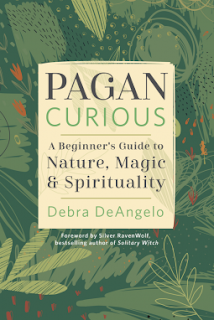
Pagan Curious: a Beginner's Guide to Nature, Magic, and Spirituality


Catalog of the Unexplained: from Aliens and Aromatherapy to Zen and Zener Cards