Showing posts with label Penguin Books. Show all posts

Wednesday, April 22, 2026

Book Review: Black-Owned

Char Adams, Black-owned: the revolutionary life of the Black bookstore. New York: Tiny Reparations Books, 2025.  ISBN: 9780593474235.

Genre: business, history, nonfiction
Subgenre: African American and Black Studies
Format: Hardback
Source: Hutchins Library, Berea College


The author has written a well-researched and readable history of Black bookstores in the United States. The story begins with the first Black-owned bookstore, which opened in New York in 1834. From there the story moves to the 20th century and on to the 21st century into today. Some of these stores were owned by activists and fostered revolutionaries and political activities. Others wanted to run a book business. Often these owners faced obstacles, racism, discrimination, violence, and harassment from the government, especially the FBI. 

The book is arranged as follows: 

  • Introduction.
  • Ten chapters.
  • Conclusion.
  • Books Black Booksellers Want Everyone to Read. A list of 10 books they want you to read. From their list I've read two: Beloved and Their Eyes Were Watching God
  • Black-Owned Bookstores in the US by State. As of this book, Kentucky does not have one (or at least one that made the list). 

This is a history of Black people, the communities the stores served, sellers, traders, publishers, literacy, and more. The narrative draws you right in. I just kept on reading. The are moving moments. Lessons to be learned. We learn about the essential role that Black bookstores play in their communities promoting reading, culture, and literacy. In addition, it is a well researched book featuring quotes and conversations with many of the book traders who made the history. 

This is a history that has been overdue, and the author finally wrote it and shared it with the world. It's an interesting book, easy to read, and everyone should be reading it. It's not just a history of bookstores. It's a part of U.S. history that was known in bits and pieces here or there by a few, mostly those who lived it. The author does an excellent job of bringing it all together. 

This is a book I recommend for all libraries, public and academic. 

5 out of 5 stars. 


Additional reading notes:  

In the introduction the author describes how she went about interviewing people, researching, and then writing the book. What she found when she started out: 

"Most of what been written about Black bookstores is strewn across old, defunct newspapers, obscure books, journals, and government documents. All of them were difficult to find. There was no singular place to learn all I wanted to know about them. I was shocked to find that no complete book existed about Black bookstores' history, struggle, and cultural impact" (2) 


Significance of Black bookstores: 

"To understand the Black social and political movements that have shaped our history, we must understand the role Black bookstores have played in them-- as well as the role they continue to play as we press forward into a new and uncertain future" (4). 


Mulzac's Liberation Bookstore had a section that more bookstores and libraries need to have: a "Know Your Enemy" section: 

". . .which Mulzac always kept up to date, had information on current events like the Watergate scandal" (61). 

The store's motto: 

"If you don't know, learn. If you know, teach" (61).  


It was about more than just selling books, for example: 

"Black students often turned to bookshops like Mulzac's to supplement their formal education through the shop's community programs, educational events, author talks, and debates. People of African descent could go to Black bookstores for the instruction and education they couldn't find in formal higher education" (67).

We may often take programs in Ethnic Studies for granted, but back then such programs did not exist and/or were fighting for their place in academia. And now with the current regime they are fighting for their academic lives again. 


Quote to remember: 

"Stop begging someone else to do for you what you should be doing for yourself" -- Ed Vaughn, activist and owner of Vaughn's Books. 


A pattern in Black America, one the Black bookstore faced: 

"This was a familiar pattern in Black America: when an aspect of Black culture became popular, large companies would capitalize on the market. With few resources to fight back, Black small business owners faltered under the disadvantage" (149). 


Boycott Note: This book is published by an imprint of Penguin Random House (PRH), and so it falls under my publishers' against Internet Archive boycott. However, I am exercising the library exception to the boycott in order to read it since my own library acquired it. Thus I am writing my full review here, and I will post a short review on our library blog. After that, I am not promoting it actively any further.  


Friday, February 24, 2023

Tarot and esoteric books read in 2022

 Welcome to this post from my series of top books I read in 2022. Today I am looking at Tarot, cartomancy, and other esoterica books I read in 2022. This list does not include any companion books to Tarot decks I used and read last year. If I have done a review for the book, I am including a link to the review.

Tarot books: 


Tarot for Change: Using the Cards for Self-Care, Acceptance, and Growth


Tarot and Tequila: a Tarot Guide with Cocktails.


The History of Tarot Art: Demystifying the Art and Arcana, Deck by Deck.


Tarot Priestess: Using the Cards to Heal, Grow, and Serve.


Tarot Rituals: Ceremonies, Ideas, and Experiences for the Tarot Lover


Other esoterica books: 


Backwoods Witchcraft: Conjure and Folk Magic from Appalachia.


Hoodoo for Everyone: Modern Approaches to Magic, Conjure, Rootwork, and Liberation.


Runes: Your Personal Guide.


Divination: Your Personal Guide.


Mercury in Retrograde: and Other Ways the Stars Can Teach You to Live Your Truth, Find Your Power, and Hear the Call of the Universe.


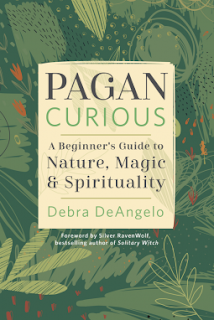
Pagan Curious: a Beginner's Guide to Nature, Magic, and Spirituality


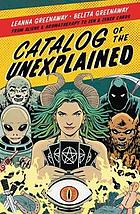
Catalog of the Unexplained: from Aliens and Aromatherapy to Zen and Zener Cards


Friday, February 10, 2023

Top Nonfiction Read in 2022

Today I am looking at the top nonfiction books I read in 2022. These are not necessarily books published in 2022. According to my end of year reading list and report, I read 42 nonfiction books. Out of those, I have eight books that I rated either four or five stars out of five stars that I am sharing now. If I have a review posted for the book, I am including the link. The list is in no particular order. 


Giuliani: the Rise and Tragic Fall of America's Mayor.


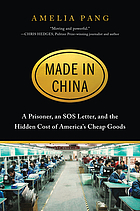
Made in China: a Prisoner, an S.O.S. Letter, and the Hidden Cost of America's Cheap Goods.


From my review: "This is a moving book that draws you in. It tugs at the heart at times. I will add it may not be for some sensitive readers, but I think as many people as possible need to read it, more so if it makes them uncomfortable."


 The Playbook: How to Deny Science, Sell Lies, and Make a Killing in the Corporate World.


 Gangsters Vs. Nazis: How Jewish Mobsters Battled Nazis in Wartime America.


From my review: "This is a book about a part of U.S. history that few people may know about. Yes, the U.S. had a Nazi past (you could argue it still does have a Nazi and fascist present), which many in the U.S. often ignore. Thus this is a must read. It is a book that reveals a part of U.S. history mostly forgotten until now."


 The King of Confidence: a Tale of Utopian Dreamers, Frontier Schemers, True Believers, False Prophets, and the Murder of an American Monarch.


From my review: "This book is not just a biography. It is a well written history of the United States at the time through the lens of James Strang's life. You are bound to learn new things and/or see them in a different light from reading this book."


 The Library: a Fragile History.

From my review: "This book aims to be a history of libraries from antiquity to the modern era. It is not just about libraries. It is also about books, collectors, book sellers, a lot of wealthy people, and folks who had the title of librarian, whether they deserved it or not."


 Star Wars Year by Year: a Visual History.

From my review: "This is another excellent coffee table book from DK Publishing.  The book looks at the history of Star Wars from it development in the 1960s to The Mandalorian. It covers from 1914-1972, before Star Wars, to 2021. "


 Allow Me to Retort: a Black Guy's Guide to the Constitution.

 From my review: "If you are stuck having to argue with some Republican/conservative about the 'greatness' of the document, this book explains exactly why they are wrong most if not all of the time. So read this book and keep it handy. "


Monday, December 26, 2022

Book Review: Tarot for Change

Jessica Dore, Tarot for Change: Using the Cards for Self-Care, Acceptance, and Growth. London, UK: Penguin Life, 2021. ISBN: 9780593295939.

Genre: Tarot
Subgenre: psychology, self help, personal development
Format: e-book galley
Source: NetGalley


This is a book that looks at Tarot mainly through a lens of psychology and self help. The book strives to present Tarot as a tool for personal development, one you can use to work on things like mindfulness and compassion. If you are looking for a Tarot book with a little less "woo," this book may be a good option.

The book is arranged into three major sections: 

  • Section I looks at what is Tarot, a brief history of Tarot and psychology, the basics of a Tarot deck, and instructions on how to use the book.
  • Section II covers the Major Arcana and Minor Arcana cards. 
  • Section III goes over additional issues like how to choose a deck, asking questions, and spreads. 

The book starts with a history of Tarot. Then it looks at Tarot and psychology with special attention to Carl Jung and Tarot. Here we look at ideas such as the collective unconscious. The author then tells her story. She worked for a publisher of self help books, which gave her access to a lot of materials including psychology textbooks that most lay people might never see let alone afford. The author eventually pursued a masters degree in social work, but chose not to do a doctorate in psychology nor become a full therapist. She thus claims she prefers to "dwell on the edges, in the liminal space" between Tarot card readers and therapists. She claims this gives her a different perspective. I will let readers decide; I think she leans more on the self help towards therapy, at times doing therapy without a license so to speak. Having said that, it is worth nothing, as the author points out, that many psychotherapists do use Tarot in their work. 

On a small side note, the practicing therapy without a license observation reminds me of Brother Tarcisio, a Benedictine monk back in my school days, who pretty much "confessed" the students then sent them to the full priest to get their absolution. Basically he was doing confessions "without a license" when he listened and provide counsel to my peers. But I digress. 

The Major Arcana chapter is mostly a retelling of the Fool's Journey that many Tarot practitioners learn. The journey has a bit more psychology tossed in, but that is the core. For each card entry, the author blends traditional elements of Tarot with psychological concepts. She draws on various authors from self help and psychology fields, some that readers may or not know or recognize. 

The third section of the book is pretty light in terms of actual instruction. The author discusses spreads, for example, but no actual spreads other than 3-card spreads. If you want to learn more about spreads, you may need a different book. Much of the overall process is left to readers. If readers are OK with just jumping in and with ambiguity, this is a good book. For readers who need more structure, they will not find it here. On that basis, this is not a good book for beginners. 

The book at times can feel like a self help book or manual, a bit too technical here or there, cold. It does have some good moments and some good words of wisdom, but you have to find them. As the book ends, it lacks a bibliography or reading list. At least a basic list of authors mentioned in the book would have been helpful for readers. 

Overall, I am glad to have read it as it adds a new perspective to my Tarot practice. I do appreciate the good parts. However, it is not an easy book to read. It can get bogged down a bit in the psychology, in terms and acronyms. Probably better to consult the parts about the cards as needed or based on interest. I like it, but I would consider it an optional acquisition. 

3 out of 5 stars. 

* * * * * 

Additional reading notes: 

A definition of Tarot: 

"Tarot is a book of seventy-eight secrets that reveal themselves over time. The cards have meanings, but they often shape-shift, so depending on the context, a card might appear in the form of an aid, charm, talisman, or benediction" (3). 


On Tarot and synchronicities: 

"When synchronicities occur, as is so often the case when we pull tarot cards and they nail the details of our lives with astounding accuracy, it may be that something previously hidden in the unconscious is trying to emerge. And that it might just be bubbling up in order to help us evolve" (7). 


On Tarot card meanings: 

"The cards do have meanings, it's true. But they-- like everything else in the world-- are not islands and they are not static. Their meanings shape-shift with time and in context, depending to a great extent on the beholder and what that person is ready, willing, and able to receive. The impact that a card has on a person is not about the person's intellectual understanding of the card's significance. Rather, each card is like an old brass bell that, when rung, holds the potential to send a ripple through our being that activates latent pools and pockets of wisdom" (17). 


Using the cards for understanding: 

"The cards can be used to help us understand ourselves as individuals, and they can be used to help us understand ourselves as part of a larger context" (20). 


An aim of the book: 

"The practical aim of this book is to provide you with new ways of understanding the tarot based on an attempt to synthesize knowledge from the fields of psychology, behavioral science, spirituality, and old stories" (29). 


How simple a spiritual practice can get: 

"Even if your spiritual practice is just recognizing in some way, each day, that there are things unfolding that you have no say in, that's a way of honoring something greater" (56). 


Friday, November 30, 2018

Book Review: White Trash

Nancy Isenberg, White Trash: the 400-year untold history of class in America. New York: Penguin, 2017.  ISBN: 9780143129677.

Genre: nonfiction
Subgenre: history, ethnicity, politics
Format: trade paperback
Source: Copy provided by the college as part of Dean's Reading Group

I read this sometime in 2017; it was before I declared my personal moratorium on reading anything political, activist, social justice, etc. Part of the reason I read it was for the campus Dean's Reading Group. I am including the basic notes I took when the reading group met at the end of this review.

If I have to describe this book in a nutshell, it would be this: the nation that became the United States has an atrocious history of basically exploiting anyone weaker and/or different for profit and gain. The irony is that very often, the racism and exploitation take turns. White people in the U.S. came from a variety of places, and many were not always seen as "white." The definition of "white" has also changed over time as one immigrant group who was previously seen as not white would settle in, integrate, become white, then act like racist assholes to the next group of immigrants. Rinse and repeat. The other big issue of course is wealth. Those who have it are more than happy to exploit those who do not. The term "white trash" mainly comes from poor whites who were literally dumped by the British in American shores to get rid of them in the old nation and put them to work exploiting the new lands. It is a term that has evolved and stayed. The book presents more details, but that is basically it in a nutshell. The exploitation and bigotry chain has not changed much from the early times of the colonies to the nation the United States is today. Kind of depressing when you really think about it.

It is not an easy book to read. For one, it is a heavy book in terms of theory and detail. In fact, much of the earlier part of the book dealing with the early history is fairly dry and repetitive, and I was tempted to drop the book a couple of times because it did have some seriously boring parts. However, once you get past that, it starts getting a little interesting. Isenberg in addition can be a bit preachy, which I bet was an extra reason the Dean's Reading Group found it appealing; they tend to like books that preach to the choir. The thing is this is a book that more people not in the choir need to be reading.

Overall, I liked the book despite it being a depressing read at times. As I said, I think more people need to be reading it. It did give me a lot to think about, and I made note of various passages to ponder and remember. Furthermore, the author provides extensive chapter notes documenting everything, and this provides material for readers wanting to learn more. Having said all that, this is the book that finally burned me out and made me declare my politics, social justice, activist materials moratorium. So take it for what its worth. The paperback edition I read does add a new preface to the book reflecting the 2016 elections and their aftermath.

3 out of 5.

* * * * * 
Additional reading notes:

Why you really need to pay attention to history. Donald Trump was not a trailblazer nor an innovator nor anything new in politics. If anything, he is just tired old recycled material from previous people, even down to his MAGA slogan:

"American democracy's quirky past haunted the Trump campaign. He was not the first cranky businessman to run for high office, even in recent memory. Ross Perot was, capturing 19 percent of the popular vote in 1992. Nor was Trump the first millionaire mogul with Hollywood ties to seek the presidency. That was William Randolph Hearst, a century ago. And he certainly can't claim to the first outsider who promised to clean up Washington and embody the hopes and dreams (and fears) of the common man. That honor belongs to Andrew Jackson. As critically, he was not the first politician to question the pedigree of a sitting president either. James Vardaman did that in spades, when he insulted President Theodore Roosevelt. Trump's rhetorical appeal to the "silent majority" was stolen from Richard Nixon. Sarah Palin paved the way for him as an earlier version of a Republican reality TV populist. Trump's favorite slogan, 'Make America Great Again,' was of course, Ronald Reagan's first" (xv). 

The argument of this book:

"The argument of this book is that America's class history is a more complicated story than we've previously considered. The past informs the present. Presidential candidates are not masters of their own destiny; rather, they are often a patchwork of rhetorical scripts, familiar gestures, political styles inherited from their predecessors, and whatever else they happen to borrow from the grab bag of popular culture" (xv).

More on the book's purpose:

"Lest the reader misconstrue the book's purpose, I want to make the point unambiguously: by reevaluating the American historical experience in class terms, I expose what is too often ignored about American identity. But I am not just pointing out what we've gotten wrong about the past; I also want to make it possible to better appreciate the gnawing contradictions still present in modern American society" (2).

Exploitation was built in early in colonial America, for example:

"The leaders of Jamestown had borrowed directly from the Roman model of slavery: abandoned children and debtors were made slaves. When indentured adults sold their anticipated labor in return for passage to America, they instantly became debtors, which made their orphaned children a collateral asset" (27).

Heck, even William Goodell Frost, president of Berea College in the 1890s, gets a mention here, and it is not exactly flattering. I will let the readers judge this one, but I will note this is often a topic of conversation on campus in some classes that look at the history of the college. I will just say Frost had his less than brilliant moments:

"In the 1890s, third-generation abolitionist William Goodell Frost, president of the integrated Berea College of Kentucky, redefined his mountain neighbors: 'The 'poor white' is actually degraded; the mountain white is a person not yet graded up.' The latter had preserved a unique lineage for centuries, and in this important way had not lost the battle for survival of the fittest. Frost saw the mountaineer as a modern-day Saxon, with the 'flavor of Chaucer' in his speech, and a clear 'Saxon temper.' He was, the college president wrote, 'our contemporary ancestor!'" (187).


* * * * *
Notes from the faculty reading group session I attended:

  • The book is heavily focused on the U.S. South.
  • If you live in poverty, and all around are poor, you don't really think about class. There is no comparison point. 
  • Even among poor people, however, there are class distinctions. So they often point fingers at each other (instead of at the real enemy).
  • The perception of lazy, a myth really about poor whites as well as for people of color.
  • Education  as a bootstrap, a way to get out. But often education is shamed by poor people. Those who "get out" seen as rising above their station. 
    • Those who get out often feel guilty about getting out. Do you still want to be part of where you come from, even invisibly? Or do you do/be the person you have become?
    • Side joke: do some of these folks need a "white trash therapy group"?
    • Question: is it a matter of having certain advantage at a certain time?
  •  Challenge: think about that narrative about education being a tool to get out. 
    • For Berea College, Rev. John G. Fee even had this notion. 
  • The book is certainly not the narrative many saw and currently see in schools. 
  • Appalachia education narrative is literally education equals getting out and not coming back. 
  • Term: "silicon holler." Work by telecommuting, but as long as you have good Internet (something we do not always have here by the way). 
    • Note: you need all types of people. It is not just about mind workers. 
  • A far future challenge: when people do not have to work (automation, drones, etc.). 
    • Irony may be a need to go back to the land. Grow your own food. Go back to basic skills of home economics (canning, child care, making things, etc.)