Showing posts with label Spirits: Alcoholic and otherwise. Show all posts

Friday, June 27, 2025

Book Review: Appalachian Mountain Christianity

Bill Leonard, Appalachian Mountain Christianity: the spirituality of otherness. Athens, GA: The University of Georgia Press, 2024. ISBN: 9780820367248.

Genre: religion
Subgenre: Christianity, Appalachia, lectures
Format: hardcover
Source: Hutchins Library, Berea College


This small book looks at Protestant Christian traditions in the Appalachian Region of the United States. The main focus is on Baptists and Holy Pentecostals, including Primitive and Old Regular Baptists. The book also looks at snake handling churches in the region. 

The book is a text version of a series of lectures on the topic that the author delivered at Stetson University in 2023. The book features four lectures, presented as chapters in the book. The book is arranged as follows: 

  • Foreword by Mitchell G. Reddish. He introduces the main speaker (the book's author). 
  • Preface.
  • Chapter 1. Looking for Christians in Appalachia.
  • Chapter 2: "A Hart Chearing and Affecting Surmond." 
  • Chapter 3: Revisiting the "Woman's Sphere." 
  • Chapter 4: Otherness on the Margins. 
  • Notes. 
  • Index. 

 At 96 pages, this slim volume covers a lot of terrain. The first lecture gives us an overview of the topic. We get a bit of history with a look at modern times and how modernity has affected these often small churches. Next, we get a look at their preachers and their preaching craft. It discusses some of the techniques they use to deliver sermons and move their members. This is followed by a discussion of the role of women. Women get some leeway on certain issues, but they are also severely limited.  Let's be honest; there is a strong element of misogyny, and women do need to toe the line, stay in their "sphere," or risk shunning and/or expulsion. Finally we look at Pentecostal serpent handlers and the "no hellers" Primitive Baptists. 

I read this book for a few reasons. One, it has local interest. Our campus is part of Appalachia. We are at the border but still in the region. Many of our students come from places described in the book. As much as I can, I tried to read books about Appalachia just to learn more. Two, as a happy heathen, I am still curious about religious practices and beliefs of others, so I read it to learn more about the beliefs the book presents. Three, every so often we get students writing about and researching religion in the region. I read this book ot see if it is one I can suggest to those students, and I can say I would suggest it. 

For me reading it, the book was interesting, but it was not always an easy read. These churches have some beliefs I am not down with, to put it charitably. So be warned if you are not a Christian when reading this. That aside, the author treats the topic as an academic with a bit of detachment and plenty of citations and references. Even the work of local scholar Loyal Jones is cited often. Now this is an academic text, but it is a very easy and accessible read. I found myself reading through it at a good pace.  Part of the reason I am sure is these are lectures, so the author had to keep the work accessible to a listening audience. Unlike writing articles, where academics can get seriously verbose, ou need to be clear and accessible in your material for a public lecture. 

In the end, this was a pretty good read. Despite a few not so comfortable moments, I am glad I read this as I feel I learned a few things. Author has a way of humanizing these believers, and we do get a bit of a sad note as we see their way of life may be leading to extinction as they can't keep the pace of modern progress away away nor hidden from their communities. In a way, their days of being frozen in time are numbered. Personally, I would not shed a tear, but others may. 

If you want to learn more on this topic, this is a good selection. Locally, this may be of interest for some General Studies and Religion classes. I do recommend it. 

4 out of 5 stars. 


Monday, June 16, 2025

Deck Review: The Enchanted Map Oracle Cards (light blue edition)

Colette Baron-Reid, The Enchanted Map Oracle Cards. Carlsbad, CA: Hay House, 2011.  ISBN: 9781401927493. (link to publisher)

Genre: nonfiction
Subgenre: divination, spirituality, oracle cards
Format: oracle card deck with companion book in boxed set
Source: Personal collection 


Bock cover for the deck kit
I reviewed the first/original Hay House edition of this deck in 2017 (link to review). Pretty much what I wrote back then applies to this book and deck kit. There are some mostly aesthetic differences, so for this review I will focus on the differences. 

The first obvious difference is the overall kit's color scheme. We went from a golden and orange color scheme to a light blue color scheme. The newer color feels a bit softer, but the overall color scheme may be a matter of personal preference. I have no feeling if one is better than the other. 

The book content is pretty much the same. We get the same text. One difference is that the previous book includes black and white images of the cards. The new book does not have images. Card title and message fonts are different in the book, but this is a minor detail. 

 Let's look at the cards. The old edition deck has gilded edges; the newer one does not. Overall, Hay House stopped gilding their decks a few years ago. The gilding is a nice touch, but it is not an essential detail for me. 

The original cards have a border. The newer cards are borderless, so if you are one of those card readers who prefer borderless cards, then you might prefer the newer edition. Both decks have the soft glossy finish, and both shuffle easily. Being borderless allows the newer art to show a bit larger, not by much but some details can be appreciated better. The card back designs are different from one deck to the other. They are both reversible. 

The only major difference is that three cards had changes in the art. I am not sure what the rationale for the changes was, but it could be some effort to do a diversity addition. I don't feel it makes much of a difference, but folks who seek or want some color diversity may prefer the new deck. In honesty, I did not care one way or the other. 

The card changes are: 

  •  Card 33: Peaks of Joy. The girl changed from white/Caucasian to a Black/PoC girl. The image is a bit larger, but the concept of the card is the same. 
  • Card 36: Commitment. Two hands touching, one over the other, white hands. Changed to two Black/PoC hands, one above the other with a star and key in between. 
  • Card 52: Magical Map Shifter. A while male, blindfolded, with various objects levitating in a circle. Possibly elven given the man has pointy ears (maybe).  Changed to a Black woman. The floating items are a bit more faint and subtle. She is not blindfolded, and she has a fan on the right hand. 

Bottom line. Do you need the new deck if you have the old one? Not really. If you prefer borderless art, and you like the lighter blue tones of the kit, go for it. If you do not have the deck already, the newer one is the one available, and I would still recommend it. If I was looking to buy it for the first time, I'd be happy buying it now. Now that I both, I will put the older one away as a backup/second copy, and keep the newer one for regular use. As for the card changes, unless you've seen and/or used the older deck, they won't make a difference. To be honest, even if you have both decks it really does not make a difference in how you view and use the deck. A lot of the images in the decks are animals, buildings, and other symbols. Folks who look more for the diversity elements may prefer the newer cards. As I said, no big deal to me. 

Overall rating for this set is still 4 out of 5 stars. I really like it. As before, you can combine this deck with some Tarot cards. I'll say if they make a pocket edition in the style of other Hay House pocket deck editions I'd consider getting it. 


Kit qualifies for the following 2025 Reading Challenge: 


Wednesday, December 11, 2024

Holiday Post 2024: Traditions, Manners, and Miscellany

Welcome to the 2024 edition of holiday posts here at The Itinerant Librarian. This is where I take a small break from the usual and look at the holiday season. I make a few lists of links that may be of interest and add a bit of commentary that I hope my four readers find interesting. I do this mainly for a bit of fun during this time of the year. Let's start with traditions, manners, and miscellany of the holidays.


Traditions and Manners 

A small village model under a Christmas tree surrounded by poinsettias.


  •  The U.S. Census Bureau has published their "2024 Winter Holiday Season" fact sheet. This is part of their "Facts for Features" series that looks at various holidays and special events over the year and then present various facts and figures drawing from census data. For example, did you know that the value of U.S. imports of Christmas decorations from China for 2023 was $2.82 billion? You can learn that and more by reading the article. 
  • PNC Bank continues their annual tradition of compiling the actual costs of the items in the song "The 12 Days of Christmas."  They've been doing their Christmas Price Index now for 41 years. 
  • The U.S. Postal Service continues their tradition of Operation Santa
  • NORAD continues their tradition of tracking Santa Claus around the world as he does his gift deliveries. We discovered this a few years back, and it is a fun thing we do at home on December 24th. We keep the browser open to their tracker, and keep an eye on it over the evening. I am sure this is great for kids, but I think kids of all ages can appreciate it. 
  • Some advice for dealing and coping with the holidays. The holidays can be a tense time for some folks. For me, that is part of the reason I avoid traveling to see others and/or hosting other people. We enjoy our quiet time at home. I don't consider spending time with others to be a relaxing activity, less so if it carries a risk of possible toxicity. 2024 is certainly proving to be a toxic year, and I am not saying that just because of the 2024 election season. So for folks who may be stuck with relatives they may rather avoid or other people who add to the toxicity, here are some suggestions for advice. 
  • Are you one of the folks who still send Christmas and/or holidays greeting cards? We do send some cards out during the holidays, though I will admit not as many as in years past. Mental Floss looks at when you should be sending them. A good rule is to start sending them as soon as December comes around, so right about now would be good.


The Christmas Tree, Decorations, and Other Objects


A classic painting. Two rabbits in a forest look out at a large Christmas tree.

  • Aww, you think that nice Christmas tree salesperson on a street or some rural place is a local grower? That is cute. Turns out those small, quaint, independent tree farms maybe not be a small and independent as they want us to believe. They are also becoming more rare. Turns out that, like every other bit of business, there is a "Big Christmas Tree" monopoly racket going on. So "let's talk about the big business of Christmas trees." Via Quartz
  • Reader's Digest looks at the history of candy canes and their invention. I admit that personally I am not a big fan of candy canes nor mint candies in general, but I can appreciate they are part of the holidays traditions for many folks.


Other trivia 

(other topics)


Five kittens peeking out of some Christmas stockings.

That is all for today. Stay tuned for the next post in the series where I will be looking at "Gifts, Strange Things, and Other Shopping." Thanks for stopping by, and as always comments within reason are always welcome. 

Happy holidays, and remember, when all else fails. . . 


British style sign in red with white letters. Text: Keep calm and drink coquito.


Friday, October 20, 2023

Book Review: Doctoring the Devil

Jake Richards, Doctoring the Devil: Notebooks of an Appalachian Conjure Man. Newburyport, MA: Weiser Books, 2021.  ISBN: 9781578637331.


Genre: Appalachia, mountain magic
Subgenre: folklore, regional interest
Format: trade paperback
Source: Hutchins Library, Berea College (yes, my library has it)


This is the author's second book, a follow up to Backwoods Witchcraft (link to my review).  In this book, the author introduces readers to some of the old conjurers and witches of Appalachia. He also discusses and presents ways for "doctoring the devil," which refers to "rooting out any unfriendly spirit bringing bad luck, poor health, and calamities of all sorts." In addition, the author offers his own tried and true spells and recipes to conjure love, money, justice, and success. The book covers a lot of ground, yet it is interesting and informative. 

The book is arranged into 13 chapters plus an introduction, a conclusion, two appendices, and a bibliography. Appendix A covers Zodiac signs and their corresponding body parts. Appendix B features a list of herbs and curios and their uses. 

After the introduction, the book starts with some background about the region and its people. If you've read the previous book, some of this may be familiar, but most of the initial material here is new. The author defines the types of workers found in the region and provides examples. Then through stories and examples, he gradually presents other topics such as catching spirits, conjurers, rituals, roots, and more. There are many lessons in the book, but it definitely does not read like a textbook or a how to manual. The author's strength is in the writing. He combines stories and a casual conversational style with the recipes and methods. This is as close as you can get to sitting in his porch and listen to him as he teaches us and shares his wisdom and craft. 

As I noted on reading similar books, keep in mind the Bible is very prominent in mountain magic and work. This work does not go far from Christianity and its influence. 

As with the author's previous book, you do not have to be a worker to read this. If you are seeking to learn how to do it, it is a good guide. This book does emphasize more how to do things. It may be more practical than the previous book. However, it also works as a good look at the region and a very significant part of its folklore. 

Overall, this is a very good book. If you are interested in the folklore and the magical traditions, this is a good book to read. If you are thinking you may be called to do this kind of work and want instruction on how to get going, it is a good guide as well. Workers and conjurers may want to add it to their shelf. For me, this was an accessible read by an author who is a great storyteller as well as generous teacher. The book is well written and draws you in with warmth and hospitality. 

For libraries that collect books on Appalachia this book is essential. 

It is an excellent read overall, so I am willing to give it the full 5 out of 5 stars. I'd add it to my shelf. 


Additional reading notes:

On the term "doctoring the devil": 

"While many know this as conjure or root work, those raised in the work and in the known called it 'doctoring the devil,' whether you're doctoring a root for someone or doctoring them of a root they're currently under. This title acknowledges how find the line is between God and the Devil. It's easy to sway with the power" (8-9).


Some old time books and guidebooks a witchdoctor and/or conjurer might have kept, especially in the early 20th century: 


What is a sin to a conjurer: 

"That is sin to a conjurer: wishing for a better life but not putting in effective steps to better it" (82). 


The role of faith if you undertake the works: 

"Faith and doubt cannot live in the same house, nor can fear be allowed to stand outside the door. If you plan to do this work, you must do it with every bone in your body and have nothing but trust in God and the spirits. You must have a strong will: you'll be conjuring angels and battling Devils to a fuller degree than most have witnessed. This is a way of life, and while it isn't for everyone, it is a calling that is a reward in its own. There is of course no need to be a professional at this: most folks work and use some things here and there to simply better the deck that life deals them, and that is fine" (218-219).


Friday, October 13, 2023

Book Review: Nonverts

Stephen Sebastian Bullivant, Nonverts: the Making of Ex-Christian America. New York: Oxford University Press, 2022. ISBN: 978019757447.

Genre: Religion, sociology
Subgenre: Interviews, studies, surveys
Format: hardcover
Source: Hutchins Library, Berea College


The author looks at the rise of "nonverts" in the United States. In a nutshell, a nonvert is someone who has left a religion to become non-religious or having no religion at all. In a way, think convert but in reverse. The author combines survey data with personal interviews to present his case. 

The book has nine chapters. Chapters alternate between looking at survey data and interpreting it and the case studies. The author's main data source is the biennial General Social Survey (GSS) out of the National Opinion Research Center, University of Chicago. The author also uses some data from Pew Research, Gallup, and Public Religion Research Institute (PRRI). The groups profiled are Mormons, Mainline Protestants, Evangelicals, or rather Exvangelicals, and Catholics, or rather "recovering" Catholics. 

The book as a whole is pretty interesting. The most interesting parts are the interviews and personal stories. The analysis chapters are good, but you have to get through statistical terms, explanations, a whole bunch of caveats, and a bit of uncertainty.

 At times it seems the author either wants to be charitable to the religions, even if they do not deserve it, or just does not want to commit. Still, he makes some good observations that are relevant to our time. 

Keep in mind that much of his work started prior to the pandemic. The narrative does take us past the pandemic, but much of the data is either pre-pandemic or just as the pandemic hit. 

I ordered this book for our library. I figured it would be useful for classes in religious studies, political science, and sociology. It may also be of interest to our general studies classes. The book provides a picture of a part of American society that many either ignore or demonize. The author argues the number of nonverts is growing, and while they are no danger to Christian America yet, they will bring changes down the road. In the end, I do not think he went far enough in his conclusion, but I leave that for readers to consider. 

I liked the book. It does offer some good insights, and it is worth reading if you are interested in the topic. If you are a nonvert or just non-religious in the United States, this book may be of interest too. 

3 out of 5 stars. 


Additional reading notes:  


Growth of the nones: 

"Nones account for roughly one in four American adults, or about 59 million people. And as you might already suspect, they are far more diverse than popular stereotypes might have you believe. Furthermore, barring some Great Millennial Revival, this proportion is set to grow and grow for the foreseeable future" (7). 


Nones are not one size fits all: 

"Put another way, the vast majority of nones do not fit easily into the popular one-size-fits-all image of a rationalist and materialist Atheist-with-a-capital-A. Not only are the majority of nones not atheists at all-- a consistent finding  going back to at least the 1960s-- but even many of those who actually are atheists are not that kind of atheist. Not believing in God, gods, or even a kindly 'Something' does not itself preclude believing in all kinds of other supernatural, spiritual, and/or professional phenomena" (69). 


Friday, June 16, 2023

Short book review: Little Book of Whiskey Cocktails

Bryan Paiement, The Little Book of Whiskey Cocktails. Lexington, KY: University of Kentucky Press, 2022. ISBN: 9780813195469.

Genre: recipe books
Subgenre: whiskey, spirits, cocktails, trivia, humor
Format: small hardcover
Source: Berea branch, Madison County (KY) Public Library 

This little book combines some stories and trivia about whiskey along with a few jokes and cocktail recipes. The book features classic recipes and some recipes created by the author. For each recipe, you get a short note with some history and trivia about the cocktail followed by the recipe. 

Overall, this small book is accessible and easy to read. Most of the recipes are easy to make and use common ingredients. If something extra, like simple syrup, is needed, the book explains how to make it. The book lacks illustrations, but it does include a key to glassware and bar tools. It is a small book that can be a good gift for whiskey fans and home mixologists. I liked it, and I would recommend it. 

3 out of 5 stars.

Monday, May 08, 2023

Deck Review: Angels and Ancestors Oracle Cards

Kyle Gray (author) and Lily Moses (artist), Angels and Ancestors Oracle Cards. Carlsbad, CA: Hay House, 2018. ISBN: 9781788170017. (Link to publisher.)

Genre: oracle cards
Subgenre: spirituality, angels, ancestors
Format: Kit with 55 cards on the deck and a small guide book
Source: I own this one


Elder card
I first used this deck in February 2023 and kept it through March 2023. This kit includes 55 cards and a companion book in a small solid box. The box is nice, and it includes a couple of quotes inside the box, a small nice detail. 

The book has 147 pages. The book is arranged as follows: 

  • Introduction. The author introduces the deck's theme, defining briefly angels and ancestors and their wisdom that we can learn using the deck. 
  • How to use your Angels and Ancestors Oracle cards. In this section, the deck is explained. The cards have no particular order, but there are categories: the Sacred Ones (30 cards), Guardians and Messengers (12 cards), Warrior Symbols (9 cards), and Seasons (4 cards). In this section, you also get how to use the cards and four spreads to try out plus some advice on reading the cards. 
  • The card entries arranged in the categories listed. Each entry includes a small black and white image of each card, card name and card keywords, message, about (a bit of card description and definition), and extended message (divinatory message and interpretation). 

The book overall is useful and informative. The introductory material offers easy instruction to learn how to use the deck and bond with it. It addresses some basic questions for beginners such as storing and cleansing your deck.  You also get some simple suggestions for rituals and ceremonies. The text is accessible. The author writes with a nurturing and encouraging tone; you feel anyone is welcome to use the deck and learn from it, finding comfort from it. The card entries offer plenty to help readers learn and reflect on the messages. The messages are simple, kind, and straightforward. There are no complex esoterica here. These are messages for everyone. 

Spirit Fox card
The card art is great. It's a realistic style, colorful and soft. It's not gaudy. It's warm, a bit comforting. For folks who look for diversity in their decks, this deck has it. It includes images from Celtic, Native American, Aboriginal, and other spiritualities and cultures. The art can appeal to various folks. I found that I can read these cards intuitively with relative ease. The images offer some depth, and are easy to interpret. The cards can be good to use for a daily or weekly message. I really like and enjoy Lily Moses's art, an I would consider seeking more of her work based on this deck. 

My only issue with this deck is the matte finish on the card stock. It's that excessive matte finish that makes the cards stick together. As a result, the cards can be very difficult to shuffle, making the deck a bit hard to use. The card stock is thick, so it feels durable, but may be hard to riffle shuffle. 

The cards measure about 5 inches by 3 1/2 inches. The art is borderless. The cards have a small banner that is not obtrusive with the card name and keywords. The card back art is nice but not reversible. 

Overall, I really like this deck. The text is good, and the art is excellent. This is a great kit overall, and this is a deck I am glad to own and recommend. For me, this is a must have deck you can use for many situations and good advice overall. 

5 out of 5 stars. 

This kit qualifies for the following 2023 Reading Challenge: 


Friday, April 28, 2023

Book Review: Backwoods Witchcraft

Jake Richards, Backwoods Witchcraft: Conjure and Folk Magic from Appalachia. Newburyport, MA: Red Wheel/Weiser Books, 2019. ISBN: 9781578636532.
 
Genre: witchcraft, magic, folk magic, Appalachia
Subgenre: regional interest, folklore
Format: trade paperback
Source: Hutchins Library, Berea College


This book looks at Appalachian witchcraft through the eyes and experience of Jake Richards. Richards offers family stories, lore, and rituals and conjure crafts. The book provides just enough instruction for those who may want to embark on this path. 

The book is arranged into 11 chapters. Some of the topics covered include stories and superstitions, ancestor veneration, spelling and fortune telling, and folk recipes and remedies. Richards takes readers from the basics of land and culture of Appalachia to how to make an altar and do your conjure work. If you want to keep learning, the book includes a bibliography for further reading. 

A strength of the book is the author's welcoming and knowledgeable style. Whether you have lived in the region all your life, or your are a transplant to the region, Richards makes you feel welcome and that with devotion, work, and respect you can start learning and building a folk magic practice of your own. 

However,  you don't have to be a conjurer, folk magician, or an apprentice to enjoy and appreciate this book. If you just want to learn about Appalachia through its folklore and conjure magic, this is a good book. Richards is also a good story teller. I was often fascinated by some of the stories and superstitions the book presents. This is a part of Appalachia that few locals talk about, and Richards is generous enough to share these stories and traditions with readers. 

Like many books that cover various topics, some topics in this book are more interesting than others. All in all, the book is accessible and interesting for the most part. 

Overall, I liked this versatile book. Whether you want to learn how to become a conjure practitioner or just want to learn about local traditions and superstitions, this book is a good selection. I definitely recommend it for any libraries interested in the Appalachian region. My library already has it. 

4 out of 5 stars. 

* * * * * 

Additional reading notes: 


The craft has many names: 

"You may have heard this craft called granny magic, hill folk hoodoo, or mountain conjure, but it's all the same" (xiv). 


A reason for this book is to preserve this long time knowledge: 

"Most of the knowledge of these hills has been lost to the oppressions of  time and poverty. Before, this knowledge was known only by memory, and now the elders are quickly passing or forget. My mother's  mother has forgotten due to Alzheimer's, but she still sees. Young folks are walking around not knowing they have some of these gifts. We need a new generation to keep these roots alive. I am of that generation, and I hope you will be too. This magic is more than a tale of the hills and the whispers of the autumn fog; it's the history of my blood and bones, and possibly yours" (xv). 


What the author will teach here, well, part of it: 

"Instead, I'll teach you the charms and roots of my family, in exchange for your promise to uphold this tradition and preserve it as it is and was and will be. I am the only yarb doctor on both sides of my family now who actively does this work. Help me bear the candle, light your flame from mine, and let's continue this for a thousand more generations to come" (xviii). 


As in other hoodoo and similar practices, the Bible is very present in Appalachian mountain magic: 

"Regardless of your own preferences or beliefs, the Bible plays a major role in Appalachian folk magic, as it is set into the religious traditions of the Southern Baptists and Protestants. The Bible is often used as a 'spell-book' of sorts, but those who grew up in a close-knit Baptist household in Appalachia understand that the Bible means more than just the Word of God" (xix). 


How Appalachian folk magic came about: 

"Appalachian folk magic came about because it gave these people a sense that things were going to be alright even in the poor circumstances most found themselves in. It let them get a handle on things, one way or another. And it works. While you won't get rich quick, you can use it to better the circumstances the world sets against you, even if you are still piss-poor afterward. With it, you can foresee the cards you're about to be dealt and change the tables somewhat in your favor" (9). 


No need to get fancy with tools, use what you have: 

"The tools used in this work are common, so no need to worry about buying expensive things. And should you be without a certain tool, make use of something you already have. There ain't no sense in buying something I recommend when you may have something better. The old folks didn't have botanicas nor new age stores they could just hop on down for supplies, and I reckon they wouldn't step foot in one anyway. Instead, they used what they had, and if all they had was scraps of newspaper, yarn, and a candle then so be it" (139). 


Friday, February 24, 2023

Tarot and esoteric books read in 2022

 Welcome to this post from my series of top books I read in 2022. Today I am looking at Tarot, cartomancy, and other esoterica books I read in 2022. This list does not include any companion books to Tarot decks I used and read last year. If I have done a review for the book, I am including a link to the review.

Tarot books: 


Tarot for Change: Using the Cards for Self-Care, Acceptance, and Growth


Tarot and Tequila: a Tarot Guide with Cocktails.


The History of Tarot Art: Demystifying the Art and Arcana, Deck by Deck.


Tarot Priestess: Using the Cards to Heal, Grow, and Serve.


Tarot Rituals: Ceremonies, Ideas, and Experiences for the Tarot Lover


Other esoterica books: 


Backwoods Witchcraft: Conjure and Folk Magic from Appalachia.


Hoodoo for Everyone: Modern Approaches to Magic, Conjure, Rootwork, and Liberation.


Runes: Your Personal Guide.


Divination: Your Personal Guide.


Mercury in Retrograde: and Other Ways the Stars Can Teach You to Live Your Truth, Find Your Power, and Hear the Call of the Universe.


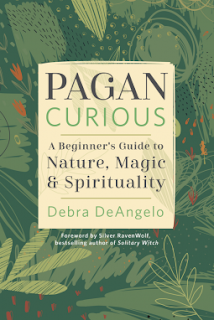
Pagan Curious: a Beginner's Guide to Nature, Magic, and Spirituality


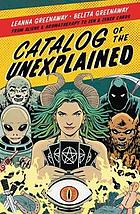
Catalog of the Unexplained: from Aliens and Aromatherapy to Zen and Zener Cards


Wednesday, August 03, 2022

Book Review: Tarot and Tequila

David Ross, Tarot and Tequila: a Tarot Guide with Cocktails. New York: Tiller Press, 2021. ISBN: 97819982169381.
 
Genre: nonfiction
Subgenre: Tarot, cocktails, recipes
Format: e-book galley
Source: NetGalley 

 
I like Tarot, and I like tequila, so I figured this would be an interesting book to read. It does not quite live up to the expectations. 

The publisher describes this book as a "positive and spiritually uplifting guide that includes basic and humorous tequila-inspired meanings for all 78 tarot cards." The book also contains 40 tequila based cocktail recipes. There is a recipe for each Major Arcana card and then some additional cocktails for selected Minor Arcana cards. In the book, the author explains how he paired the cocktails with the cards based on card attributes. 

We need to look at this book as a Tarot guide and as a cocktail recipes book. 

As a Tarot book, the card meanings and interpretations are fairly basic. The author does use a very casual and relaxed tone in providing the card interpretations. The card interpretations include: basic definition, reversed basic definition, tequila definition, and reversed tequila definition. Think of the tequila definitions a bit more in terms of bar and drinking culture life. Depending on how much or how little you relate to bard and drinking culture you may or not relate to these meanings and definitions. At the end of the day, the card interpretations overall are very basic. As a Tarot book, this book is at the beginner's level. There is not much here for the advanced Tarot users. As a Tarot book, it is nice but optional especially if you have more comprehensive Tarot books. 

As a cocktail book, it's like every other artsy cocktail book. Recipes vary in difficulty to make, mostly trending to complicated. Some ingredients are not easy to get and/or require some significant work to make such as making infusions, for example an espresso infused tequila for the Negroni that is the Fool's Cocktail. Your ability to make some of these at home with very basic ingredients may be low. I say that as someone with a small basic liquor cabinet; many ingredients mentioned would be difficult to make or acquire for the average person at home. In that sense, this book is not unlike many bar and cocktail books that feature nice photos of cocktails and exotic recipes no average person can make at home. Except there are no photos in this book. 

The book is illustrated with some nice art from the author's Tarot deck, the Sugar Skull Tarot deck (sold separately). The illustrations, in the galley are black and white. After a bit of searching, I found that they are in color in the final book edition. The art style is nice, simple, and can be a bit playful. You do not need the author's deck to read and enjoy the boo, but if you really like the book you might consider getting the deck. 

Overall, I thought the book was OK. It reflects the author's trade of doing Tarot at parties and corporate events, i.e. it feels more like a party book. I am not saying that is a bad thing. I think Tarot can be playful, happy, and yes, something you can do over cocktails. This book is just pretty lightweight. It feels and reads more like a coffee table book than a book for serious Tarot practice. 
 
This is a book to borrow. For public libraries this could be an optional selection, especially if they already collect other books on Tarot, cartomancy, divination, and other esoterica. Or public libraries could select it as they would any other cocktail recipes book. Not recommended for academic libraries. It is not one I would buy for my academic library. 

2 out of 5 stars. 
 
* * * * * 

Some additional reading notes: 

On forming connections through Tarot: 

"When I obliged, I found that by reading a person's cards we became somehow connected. People surprisingly opened up to me and we would have these intense emotional conversations that meant more to me than I would have ever expected" (8).

On Tarot cards as a useful tool: 

"For me, tarot cards are a very useful tool that can be used to help people work through their problems in their lives. Whether it be through a tarot reading or by meditating on the cards for yourself, there are many lessons that can be learned through their symbolism and interpretations" (8). 

On so many Tarot books out there: 

"I eventually realized that I was buying essentially the same book with some small variations and differences" (11). 

I found that statement about Tarot books refreshing, that the author could say that. Now, I am not as experienced nor as advanced as many Tarotistas out there, but I am making that discovery as well. While I know my cartomancy learning continues I do feel that I need to be more selective about what Tarot and cartomancy books I choose to read. Life is too short to just read aimlessly, especially in this cartomancy journey. 
 
This book qualifies for the following 2022 Reading Challenge: 


Friday, February 18, 2022

Book Review: Pagan Curious

Debra DeAngelo, Pagan Curious: a Beginner's Guide to Nature, Magic, and Spirituality. Woodbury, MN: Llewellyn, 2022. ISBN: 9780738766539.
 
Genre: nonfiction
Subgenre: Paganism, inspirational, guides, spirituality
Format: e-book galley
Source: NetGalley


I picked up this book because I am somewhat pagan curious myself. The book is not perfect, but it does provide a good amount of information on various topics. As the author states, "this is not a Witchcraft 101 book" (3). It's more a book for folks who may know little about paganism in general. 

The book is arranged into three major sections: 

  • Section One: Your Inner Realm. To start your journey, the author suggests readers need to know themselves first.
  • Section Two: Your Outer Realm. This looks at connecting with nature and the outer realm.
  • Section Three: Your Magical Realm. This looks at various magical practices and pagan ways. For some of us, this may be the most interesting part of the book. 

Let's get a big issue out of the way. The author can and does have strong views, and they are not shy about them. The first section is the weakest part of the book, and a big reason is the author getting on their soapbox. She does a whole rant on the beauty industry that was mostly unnecessary. The evils of that industry are well known, and there are plenty of books on just that topic. The rant was unnecessary, and it detracts from the actual topic of getting to know yourself first before you go outside yourself. Some readers may feel like bailing out on the here, but it may be worth it to skim ahead. 

Once you get out of the first section, the rest of the book is informative. This is not a book with depth. It is more a book to provide an overview and a sampling of what is available and possible in pagan paths. The author provides basic definitions as needed. The author also provides good lists for topics, for example, Chapter 14 has a list of various pagan paths. The list is a sample of paths available; author also notes many pagans create their own paths. There is a lot of flexibility for those who desire it. 

A strength of the book is in the exercises. Throughout the book, the author offers a variety of exercises for learning and reflection. Exercises go from meditations and to going outdoors to small rituals. You not only learn by reading; you also learn with some practice. 
 
Overall, I liked the book, and it may be one I would consult again as needed. Once you get past the first section, it starts getting interesting. I'd recommend for public libraries, especially if they would like to add more books on paganism. For readers who are curious, who just want to see what are some of the options in paganism, this can be a start. For readers not ready or willing to commit to a path, this may be good too. For academic libraries, this is optional. I may acquire it for my library since we do have some pagans on campus. 
 
Note the book features a recommended reading list at the end of each chapter, and it has a bibliography at the end of the book that is helpful for folks wanting to read further. I will be seeking some of the books in the bibliography for my own path and learning. 
 
3 out of 5 stars.
 
* * * * * 
 
Additional reading notes: 
 
The author argues for our Pagan past: 
 
"Buried in your own DNA is a spiritual connection to the natural world, and its energies and rhythms; buried in your own DNA is a cellular memory on an intricate connection to nature-- of being completely in tune with all the wonder and mystery of life itself; buried in your own DNA is an ancient ancestor who lived a spiritual dance with nature and knew the mystical stories about how it all worked, passed on by each generation that came earlier. It's your own Pagan past, tens of thousands of generations of it, longing to express itself again" (2). 
 
I could relate to this statement about how hard it can be to be a seeker in Bumfuck, USA: 
 
"However, it's tough being a Seeker when you live in a tiny town in the middle of bumdunk nowhere with more churches than bars, and only one stoplight-- and it didn't even have three colors, only flashing red. There were no pagans anywhere to be seen" (3). 

It's not unlike here where pagans are very few and certainly not very visible. Lucky for me, there is a mostly robust Internet and now books like this one to make the way a bit easier for me and others like me. On a side note, I still have much to deprogram, but that is another story. 

The author by the way, like a good number of pagans and "woo" people, can be a bit too optimistic. They can have a bit of a Pollyanna syndrome: 

"When you see a shirt you absolutely love, do you look at the price tag, decide you don't deserve it, and put it back?" (18). 

Yes. You bet I look at the price tag. It is called being realistic. Some of us really can't afford it. Has nothing to do with whether you deserve it or not. At some point, at least for some, reality does hit this whole feel good no matter what doctrine, which here to be honest is sounding a bit like pap. 


* * * * * 
 
Book qualifies for this 2022 book challenge: 


Monday, February 15, 2021

Booknote: Madame Blavatsky's Baboon

 
Genre: nonfiction
Subgenre: history, occultism
Format: hardcover 
Source: Hutchins Library of Berea College
 

While the overall topic of the book could be interesting, the author's presentation is seriously dry and boring. I honestly do not see why anyone, as I've seen in some other reviews after reading this book, to be witty or even humorous. 

The founding and spread of Theosophy, where the book starts, is presented as a constant soap opera between Blavatsky and those who worked with her, revealing Blavatsky as more of a charlatan than sage. Yet this was the era of spiritualism when celebrities and common people embraced spiritualism and other beliefs; this was a time where many had a serious spiritual hunger. As I said, this could be an interesting topic, but the author just drones on and on, and after a while the petty arguments, Blavatsky's prima donna behavior, and other minutiae just get to be a drag to read, There are much better books on this era out there, and I will go find one of those instead. 

The title is also somewhat  misleading. Spiritualism was not "brought" to America. It was an American born movement that spread out of the United States on to much of the English speaking world. Not that it matters since this books spends little time in the United States anyhow. In the end, the author just tries to pack way too much, lacks focus at times, and it is just not really interesting. This is one book to skip. 

1 out of 5 stars (barely). 

This book qualifies for the following 2021 Reading Challenges: 


Tuesday, December 15, 2020

Holiday Post 2020: Gifts, Strange Items, and Other Shopping

Welcome to the second in the series of Holiday Posts for 2020 here at The Itinerant Librarian. Today I am looking at gifts and other strange items people give each other for the holidays. As I understand it, last Friday was pretty much the last day to place online orders if you want things to arrive by Christmas. Then again, if you are using the Big A's Primo service or are willing to pay extra for rush delivery, you may still be good to go. For us, since we also celebrate Dia de Reyes (Three Kings Day) at home, anything not arriving by Christmas can wait until January 6. Anyhow, maybe you find a last minute idea for a gift here, or you can make fun with me at some of the ridiculous gift suggestions you often find this time of year.


General Gift Ideas


  • Before we start making fun of ridiculous gifts or such, let's start with a public service announcement. Lifehacker provides advice so you do not fall for gift card scams. Scams like this happen all year, but they tend to be popular around the holidays. These scams often take the form of someone impersonating a company or service, or even the IRS, and demanding payment in some ultimatum (i.e., they'll cut off your electricity) and that you have to pay with a gift card. Why a gift card? According to the article, "gift cards can’t be traced, and they can be sold for money. Once the scammer gets your gift card number and a PIN they’ll have access to the cash on your card." Read the article for details and do be careful. 
  • Speaking of gift cards, they do remain a popular option when it comes to gifts. Cosmopolitan has a list of 18 gift card ideas for folks in 2020. To be honest, these days I often prefer a gift card, preferably a VISA or MasterCard prepaid one that I can use where and how I want. I often use those to shop online (way less risky than using a personal credit or debit card). I often save any money gift cards I get to use later in the year when the big Tarot and cartomancy sales happen (usually around late August to September). There are plenty of other gift card options, and I would say if you know someone relatively well, a gift card to a favorite place of theirs may be a good idea. Do make sure you use the gift card. Do not be one of these people who leave their cards unused. So mind the details, use it sooner rather than later, and check for any expiration dates and/or inactivity fees. 
  • If you have a fancy mom, GQ has some gift ideas for her. For example, a $1,100 "bone cuff" (bracelet) and a $100 strap for her Apple Watch (just the strap, watch not included. You have to spend more if you want the watch). 
  • For fancy guys, GQ has a fancy list of things for men. Among the excessive items: a $53 scarf, a $170 coffee maker (what? Mr. Coffee not good enough?), and a $350 pair of headphones.
  • Other bits of gift giving advice.
    • Are you considering getting a personalized gift for someone? Here are some tips and advice via Incredible Things
    • Did you get a not so good gift, and you feel a bit disappointed? VICE offers some advice of what to say at such times. Your choice of reaction can be dependent on the type of gift. For example, "not all “bad” gifts are created equal; there’s a massive difference between a meh gift from a family member who doesn’t know you particularly well versus an egregiously off gift from your partner of five years."
    • Alison Green answers the question of best gifts for your coworkers over at Slate.  Personally, I do not think you should be giving your coworkers anything; these are your coworkers, not family, kin, or even friends. But if you are stuck in some "way too happy" workplace where they insist you have to give someone something and (pretend at least) to partake in (forced) festivities, Ms. Green has some thoughtful and helpful advice. Now Green adheres to the rule that in the workplace gifts should flow down, not up, i.e., the higher ups give the gifts to workers, not the other way around (due to power dynamics). Again, speaking for myself, I'd rather the managers just refrained. Again, they are not family, kin, nor friends. Then again, if your "manager" is the Queen of England, maybe you do need to smile and say thank you for that nice pudding she got you if you are part of her staff. Story via The Sun
  • If you are feeling charitable, perhaps you'd consider making a donation to some nonprofits that hand out books. Via Electric Literature.

 
Specific and Niche Gifts


  •  For those who like pens and writing, Goulet Pens blog highlights some fountain pens under $35. The LAMY Safari is one I would not mind trying out. 
  • For people who love Netflix, via Cosmopolitan. This is mostly Netflix related swag such as a cutting board and a spoon. The list also has things like blankets and throws so you can stay warm while you binge watch whatever it is you binge watch in Netflix. 
  • For the cannabis/pot person (where legal).
  •  Boing Boing has a guide for your tabletop gamer family and friends. The list of course includes some classics like Dungeons and Dragons, but then there are games like Pitchstorm (pitching bad movies to movie executives. This one sounds interesting to me). 
  • For the person who enjoys collecting toys and other collectibles, Jo Blo has a nice list. 
  • For the book people in your life. 
    • Fine Books and Collections magazine blog has a short list of books for bibliophiles
    • Book Riot has a list of books to give as gifts as well as other gifts for readers. To be honest, the books on their list are not ones I would want as gifts, but I am sure they are fine for other people. 
    • For the reader who likes books about movies and media, they may be interested in Jo Blo's gift guide. For me, I'd be interested in the Star Wars: the Lightsaber Collection (which also reminds me of a Harry Potter magic wands book my daughter has), X-Files: the Official Archives, and the Suburban Grindhouse book. 
  • For the people who read and like comics and graphic novels. 
  • For Tarot, cartomancy and mystical folks: 
    • Theresa Reed, the Tarot Lady, has her 2020 Tarot, Astrology, and Mystical Holiday Shopping Guide. List includes decks, books, and even a few services, like say, if you want to get a Tarot reading (except from her. She stopped reading for the public). The post also has a few other miscellany.
    • Colette Baron-Reid has a holiday gift guide. This one is small and has a bit more emphasis on self care ideas, which after 2020 I think we all deserve some self-care. On a side note, I am using her Good Tarot deck this month for my daily card draws. I will have a review of it on this blog probably next month, and deck interview spread for it over at Alchemical Thoughts later.

Alcohol and Spirits 


Uber Rich/Fancy Gifts


Adult/Sexy Gifts Ideas 
(the possibly NSFW part)