Showing posts with label New Press. Show all posts

Friday, November 21, 2025

Book Review: Burned by Billionaires

Chuck Collins, Burned by billionaires: how concentrated wealth and power are ruining our lives and planet. New York: The New Press, 2025. ISBN: 9781620979099. 

Genre: business, economics, politics
Subgenre: wealth
Format: E-book galley, though the publisher did also send a print galley
Source: Edelweiss Plus for the ebook galley.    

In a nutshell, the author exposes the constant and often reckless and cruel damage that the uber rich inflict on society as a whole. In a time when ordinary people are showing resentment and a desire to deal with billionaires, this book is timely.

The book is organized in three major parts: 

  • Part One defines "the wealthy." It explains how people become billionaires, and a lot of it is privilege and unfair advantages, but that is explained further in the book, and how billionaires were created. 
  • Part Two is the core of the book where it explains how billionaires impoverish the rest of us, and they pretty much don't give a damn about the rest of us. From trashing the planet to making us pay more taxes to buying and stealing votes and government, the uber rich are truly toxic for the rest of society. This chapter illustrates well George Carlin's term "the real owners." 
  • Part Three offers some solutions, or attempts at solutions. This is the part of the book where I am highly skeptical. The usual reforms, in my humble estimation, are not going to get us out of this hole. Billionaires are started to forget that if they keep exploiting the regular people for greed's sake it will be a matter of time before revolution happens. It may be a while given how anesthetized and lazy Americans can be, but give it time. Anyhow the author sees small signs that change may be possible. I am not that optimistic, but your mileage may vary.

This is a book to read a bit at a time. It is timely, and it is informative. If you want to learn more about how billionaires got where they are now, how they stay there, and what they do to keep their dynasties going, then you need to read this book. It is a straightforward exposition of how our common enemy operates and stays entrenched. 

The book is a relatively easy read, so anyone can read it. The book also includes charts and graphs to reinforce points. In addition it also features a few cartoons to add a little humor to what is a heavy topic. 

If you know someone who falls for the myth that billionaires are "self-made men" and/or are special in some way, hand them this book to read so they can dispel that myth. 

Your odd uncle who swears Trump is a financial genius? Hand them this book to read and tell them to shut up. 

Billionaires are not special. Very often they just had luck, maybe a good idea, privilege, and fortunes to draw on whether from family or government subsidies. Meanwhile society pays the true costs. This book shows and explains what those social true costs are. 

The book is not always an easy read, but I still recommend it for public and academic libraries. I'd say it is one to borrow then pass on so others can read it and learn as well. For me, it was worth reading, even if I have already read similar books. Barons comes to mind as a book with similar appeal factors.  

4 out of 5 stars. 


Additional reading notes: 

The focus of the book according to the author: 

"Still, the focus here is not on wealthy individuals; there are both scoundrels and generous souls among the lot. Instead, this book argues that an economy that is growing billionaires at all, much less at their current rate of increase, is not a sign of prosperity but of policy failure, resulting in a systematic problem with hugely consequential and negative impacts for society" (3). 

Where the author is finding those "generous souls" I am not sure since the scoundrels clearly have abundant numbers. And while he views the phrase "abolishing billionaires" as "extremist," I certainly don't have a problem with it, and I get the feeling more people may be willing to consider bringing back guillotines. These are Hard Times, and being polite is not cutting it. However, I do agree with the authors that focusing on "abolishing a system of economic laws, rules, and practices" that keeps billionaires flush and the rest of us suffering is a good idea. However, that takes a degree of will a lot of Americans lack, in part because so many of them see themselves as temporarily inconvenienced millionaires. Until Americans change that view, roll up their sleeves, and work for a common good the author's idea is mostly pie in the sky. 

 The drivers of billionaire expansion: 

"There are essentially three economic forces driving the billionaire expansion: the suppression of wages for average working people (even as those workers became more productive); the meteoric rise in the stock market; and massive tax cuts for the wealthiest households that accelerated in the Reagan era and have continued to the present day" (48). 

If you have been around at least a while and paid attention, you know the above to be true. Costs keep going up while wages stagnate. When your groceries, rent, and other daily living costs keep going up but your wages don't, you do notice. Politicians and economists can make all kinds of arguments and excuses, but in the end people do note higher prices and wages that don't keep up. At some point, as the author mentions in the book, oligarchies breed revolutions. That revolution may be slower to come in the United States, but give it time. Time can be a great equalizer.  

Why you would be better off living in Canada or northern Europe, and why I wish I could afford to move to one of those places: 

"Because these countries make government investments in early childhood education, broad access to health care, debt-free higher education, and job and skills training-- all drivers of economic mobility" (56).


This book qualifies for the following 2025 Reading Challenge: 


Monday, June 23, 2025

Book Review: Bad Law

Elie Mystal, Bad law: ten popular laws that are ruining America. New York: The New Press, 2025.  ISBN: 9781620978580. 

Genre: U.S. politics
Subgenre: legislation, policy
Format: E-book galley; hardcover
Source: Edelweiss Plus; Hutchins Library, Berea College 
 

Elie Mystal is back with a new book about bad laws that keep causing harm but Americans consistently choose to keep them in the books, often for bigoted and privileged reasons. The book discusses 10 bad laws and one constitutional amendment that are, as he writes, "bigoted, ignorant, and unfair. . ." (6). The catch is these bad laws can be repealed, often quite easily, but Americans choose not to do so. And while most of these terrible bits of legislation were brought forth by Republicans, Democrats often went along aiding and abetting the Republicans. 

The book includes an introduction, 10 chapters, an epilogue, and a set of notes documenting the author's facts and research. Some of the topics the author discusses include voter registration, incarceration, LGBTQ rights, and religion. 

Mystal is a good writer, and he is very good at explaining ideas in a clear and accessible way. He can take legal concepts and break them down so ordinary folks can understand them. Add in a sense of humor, often dark humor, and some sarcasm and snark, and you have an entertaining and educational read. You do learn quite a bit about how laws work in the United States, mostly to uphold white privilege while oppressing anyone else not white, not a certain brand of Christian, and not male. 

My one disappointment is the book's conclusion, which, after railing about the evils of both political parties (rightfully so), goes to the old Democrat plea of "vote harder." We are way past that lame plea, and while I may not have an answer now, that conclusion does not inspire much faith, especially in the very Hard Times of 2025. 

Is the book worth reading? All in all yes, Should more people be reading it? Absolutely, but again, as I often say and write about books like this, the people need to be reading it never will. Those who will most likely read it are pretty much part of the choir. For me, at this point in time I am breaking my moratorium on reading and engaging with political/social issues/activist material. That is the moratorium I gave myself after the 2016 U.S. elections, which I did to keep my sanity. Breaking the moratorium to read this book was worth it. Despite an issue here or there, this is a book I will talk about and try to get more people to read it. 

Overall I really like the book, and I think it is a necessary book in these Hard Times. I did order a copy for our library, and I strongly recommend other libraries, public and academic, order it for their collections. 

4 out of 5 stars.


Additional reading notes: 

A reason, for me, for when some Americans whine "not all of us" or a variant of that line it is not an excuse: 

"In our society, we, the people, govern our laws, not the other way around. We choose them. We choose what's legal or illegal; we choose what's punished or rewarded. We choose to live this way" (1). 

It may not be all, but enough Americans constantly choose this and the rest are either too busy trying to live or just don't care anymore. 


The kind of laws the United States has and nurtures: 

"Our laws promoted bigotry and discrimination, the rapacious accumulation and hoarding of wealth, and vigilante justice, even at the cost our own children die in the cross fire. We have oft-repeated euphemisms to justify these choices: we call the hoarding of wealth 'fostering competition,' we call bigotry 'religious freedom,' and we call the mass murder of school children 'the Second Amendment'" (2). 

And these laws are by choice and very much self-inflicted wounds. In these Hard Times this may not be an easy book to read, but like a prophet the author preaches trying to get our society to see. But again, as an old saying goes, "no hay peor ciego que el que no quiere ver." 


What the book does in brief: 

"This book will give you arguments to deploy against the forces of injustice, along with demands you can make of your elected representatives" (8). 


An example from the book where the author and I part ways: 

"We would all wake up tomorrow and simply decide to do better and voted for people with a more robust appreciation for fairness and equality" (8). 

We could, but I know, and I am willing to bet he knows it ain't happening any time soon if ever. I am more likely to win the Powerball lottery drawing, or better yet become a famous writer (this one if I put in the work I could do, which is more than most Americans are willing to do to fix their country). 


What the "American experiment" is really about: 

"The 'American Experiment' is not and has never been an experiment in democracy or republican self-government. It has always been an exercise in wealthy white male domination where everybody else, and the only question has been how long those whites can get away with it before everybody else comes together to defeat them" (16). 


Oh no, Mystal would not say both parties are the same, that would be simplistic, no way: 

"I am of the opinion that there is an important, cognizable difference between the people who want to keep America white through civil law and deportation and the people who want to keep America white through criminal law and armed good squads hunting immigrants" (45). 

Just so we are clear. 


Book qualifies for the following 2025 Reading Challenge: 


Friday, October 11, 2024

Book Review: War Made Invisible

Norman Solomon, War Made Invisible: How America Hides the Human Toll of Its Military Machine. New York: The New Press, 2023.  

Genre: current affairs, military history
Subgenre: political science, United States policy, economics
Format: hardcover
Source: Hutchins Library, Berea College
 
"What a thing it is to have a country that can't be wrong, but if it is, is right anyway!" --William Dean Howells in his short story "Editha" (quoted by Solomon in 117). 


This book provides detail on how the United States stays in a constant state of war, yet most U.S. citizens have no idea. The United States Government uses propaganda, subterfuge, and manipulation to keep most of the populace in the dark. The American press and media are fully complicit in this deception.

The book is arranged into nine chapters plus an introduction and notes. The notes show the book is very well documented. Chapter topics include humane wars, which are anything except humane, and the real costs of war and who really benefits. 

What are some things we learn from this book? The U.S. maintains a constant state of warfare, but it avoids calling it that. If you wonder why the United States can't or rather won't fund things like health care and education, it's because they keep dumping money on warfare. Before you start pointing fingers, both American political parties actively do it. President Obama may have won the Nobel Peace Prize, but he did his active part to keep American warfare alive. So did President Trump, and so does President Biden. As the author writes, 

"In Washington, most elected Democrats join with Republicans in striving to paper over the true costs-- individual, social, economic, environmental-- of wars that they keep voting to fund" (161).

We learn that the American press is fully complicit in this process. Major networks and newspapers go along with whatever line the Pentagon and the administration offer. Any reporter daring to question that narrative will find themselves out of a job soon. Promoting patriotism and jingoism brings in ratings, advertising revenue, and good business. Both conservative and liberal networks stay within the lines. The author adds, 

"The business of war and the business of news are thoroughly intertwined, and-- no matter what political churn or corporate consolidation occurs-- the essence of a military-industrial-media complex is structured to be resolute in retaining and wielding its power" (76).

We also learn how defense industries and contractors get the most benefit. The United States could create and encourage jobs in more constructive endeavors, but it chooses to keep funding war industries. It helps those industries that they have good lobbyists and plenty of money for political bribes, oops, donations. It also helps that most Americans don't really question this system, and for the most part believe in the nobility of their military. For the record, that military is far from noble and certainly not well intentioned. 

The book mainly stays within the late 20th Century and into the 21st Century. Naturally, the role of 9/11 in ramping up the American war machine is prominent, but the United States was already deep in constant warfare well enough before 9/11.The narrative in the book is not fully linear; the author often jumps back and forth in time. Transitions between time periods are not always smooth, so the reading pace is not always easy. Despite that, if the topic interests you then this can be an interesting book. The book may be revealing to those folks who never question the United States and its military machine if they are willing to learn what is really going on. 

Overall, this is a necessary book that more people should read, but as often the case in the United States they probably won't read. One thing it does well is answer the question of where the United States and its people choose to put their money, and it's on warfare. The military industrial complex is very much alive, well, and wealthy in the United States. Not an easy read at times, but I really liked it. 

I recommend the book for public and academic libraries. Classes in political science may want to consider adding it to their reading lists. It is mostly well written and accessible.  

4 out of 5 stars. 


Additional reading notes: 

What is necessary for perpetual war: 

"Patterns of convenient silence and deceptive messaging are as necessary for perpetual war as the Pentagon's bombs and missiles-- patterns so familiar that they are apt to seem normal, even natural" (15).


Book mentioned in this book that may be of interest: 


 If a lot of the book sounds Orwellian, it's because it is. As I read this book I found myself recalling passages from the novel 1984 such as those explaining the need for a constant state of warfare. 


Friday, February 10, 2023

Top Nonfiction Read in 2022

Today I am looking at the top nonfiction books I read in 2022. These are not necessarily books published in 2022. According to my end of year reading list and report, I read 42 nonfiction books. Out of those, I have eight books that I rated either four or five stars out of five stars that I am sharing now. If I have a review posted for the book, I am including the link. The list is in no particular order. 


Giuliani: the Rise and Tragic Fall of America's Mayor.


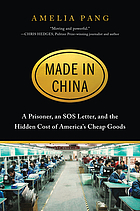
Made in China: a Prisoner, an S.O.S. Letter, and the Hidden Cost of America's Cheap Goods.


From my review: "This is a moving book that draws you in. It tugs at the heart at times. I will add it may not be for some sensitive readers, but I think as many people as possible need to read it, more so if it makes them uncomfortable."


 The Playbook: How to Deny Science, Sell Lies, and Make a Killing in the Corporate World.


 Gangsters Vs. Nazis: How Jewish Mobsters Battled Nazis in Wartime America.


From my review: "This is a book about a part of U.S. history that few people may know about. Yes, the U.S. had a Nazi past (you could argue it still does have a Nazi and fascist present), which many in the U.S. often ignore. Thus this is a must read. It is a book that reveals a part of U.S. history mostly forgotten until now."


 The King of Confidence: a Tale of Utopian Dreamers, Frontier Schemers, True Believers, False Prophets, and the Murder of an American Monarch.


From my review: "This book is not just a biography. It is a well written history of the United States at the time through the lens of James Strang's life. You are bound to learn new things and/or see them in a different light from reading this book."


 The Library: a Fragile History.

From my review: "This book aims to be a history of libraries from antiquity to the modern era. It is not just about libraries. It is also about books, collectors, book sellers, a lot of wealthy people, and folks who had the title of librarian, whether they deserved it or not."


 Star Wars Year by Year: a Visual History.

From my review: "This is another excellent coffee table book from DK Publishing.  The book looks at the history of Star Wars from it development in the 1960s to The Mandalorian. It covers from 1914-1972, before Star Wars, to 2021. "


 Allow Me to Retort: a Black Guy's Guide to the Constitution.

 From my review: "If you are stuck having to argue with some Republican/conservative about the 'greatness' of the document, this book explains exactly why they are wrong most if not all of the time. So read this book and keep it handy. "


Wednesday, March 09, 2022

Book Review: Allow Me to Retort

Elie Mystal, Allow Me to Retort: a Black Guy's Guide to the Constitution. New York: The New Press, 2022.  ISBN: 9781620976814.
 
Genre: politics, U.S. history
Subgenre: African American, law and legal
Format: e-book galley
Source: NetGalley 


The subtitle of the book tells you a bit about what the book is: "a Black Guy's Guide to the Constitution." Elie Mystal is a lawyer as well as author, justice correspondent for The Nation, and a commentator for MSNBC. He takes on a big task: to debunk the myth that the U.S. Constitution is infallible and inclusive. In reality, the document is a monument to preserve and maintain White supremacy at the expense of Black people (as well as other non-White people, but Mystal focuses mainly on Black people, and that is a big task). If you are stuck having to argue with some Republican/conservative about the "greatness" of the document, this book explains exactly why they are wrong most if not all of the time. So read this book and keep it handy. 
 
The book includes an introduction, 21 chapters, and an epilogue. It also has a section of notes to provide documentation, references, and evidence to support the author's arguments. In 21 chapters, the author goes through key elements of the Constitution. He pays close attention to Bill of Rights (the first ten amendments). He also discusses various common issues such as police harassment and brutality, land theft, and reminds readers that yes, the document can be amended. He also reminds us that the law is not really objective; it is "a collection of subjective decision. . . " (6), and the reason for that is explained in the book. 
 
The author writes in clear language. Legal terms are explained, but the legalese is fairly minimal. This is a book anyone can read and learn from it. Needless to say, some folks may not like being told the truth. Give them this book anyways; they need to read it then do their work. 
 
Overall, it is a good book. It can be seriously infuriating, and at times the situation may seem hopeless. I will admit I have less faith in the American people than the author does, but I think each reader needs to be their own judge. The book is well written, and it makes good, compelling, and well supported arguments. Some readers may not like it, but like has nothing to do with truth. Do note some parts of the book may be a bit more interesting than others. Pacing can be a bit inconsistent; some parts may be a bit longer than they need to be. 
 
To be honest, this is the kind of book I think would be good for the faculty reading group on our campus to read and discuss. However, this is not an academic volume, so I am afraid the group might view it as beneath them. The fact it is not an academic tome is a strength as it is accessible to all readers. 
 
For me, this book falls under my self-imposed moratorium on political/social issues/activist materials. I broke my moratorium for this book because it is timely and relevant, plus I was curious about the book and wanted to read it. I also chose it to read for Black History Month. 
 
I do recommend this book for all libraries, yet I am aware it may not be palatable to certain communities. I say order the book anyhow. This is one I would order for our library. The combination of good arguments, evidence, and a touch of snark is just what a lot of people need to read. I really liked this one. 
 
4 out of 5 stars. 
 
* * * * * 
 
Additional reading notes: 
 
What the Constitution is: 
 
"It is a document designed to create a society of enduring white male dominance, hastily edited in the margins to allow for what basic political rights white men could be convinced to share. The Constitution is an imperfect work that urgently and consistently needs to be modified and reimagined to make good on its unrealized promises of justice and equality for all" (1). 
 
Who wrote the Constitution: 
 
"It was written by a collection of wealthy slavers, wealthy colonizers, and wealthy antislavery white men who were nonetheless willing to compromise and profit together with slavers and colonizers. At no point have people of color  or women been given a real say in how it was written, interpreted, or amended" (2). 

By the way, SCOTUS is not the end all, be all: 

"Sometimes people forget that most of the decisions made by the Court are issues of interpretation that can be directly reversed by legislation, if you have the votes" (19). 

* * * * * 

This book qualifies for the following 2022 Reading Challenge: