Showing posts with label Simon and Schuster. Show all posts

Friday, March 27, 2026

Book Review: Mailman

Stephen Starring Grant, Mailman: my wild ride delivering the mail in Appalachia and finally finding home. New York: Simon and Schuster, 2025. 9781668018040.  

Genre: memoir, work, jobs 
Subgenre: Appalachia, USPS
Format: hardcover
Source: Hutchins Library, Berea College  
 

This is the author's memoir of his one-year stint working as a rural postal carrier in the Blue Ridge Mountains of Virginia. When he loses his fairly high end consulting job, he needs work that will provide some good health insurance. It turns out the U.S. Postal Service does that, and the health insurance kicks in right away once you are hired. Also, he loses his job just as the pandemic is starting to explode, he has health issues, cancer, and he is 50, so that adds to the urgency. 

The publisher describes the book as "exuberant, hilarious, and profound memoir." I would not go that far. I picked up this book for a couple of reasons. One, I thought the topic about a mailman and the USPS would be interesting. Two, the book is set in the Appalachian Region, so it has a regional interest locally. I had some high expectations, though I knew this book is another example of "someone does a stunt for a fixed amount of time then gets a book out of it" genre. I've read a few of those books. Some were good, and others not so much. This one for me falls into the not so much. 

An issue for me is that the book is not that interesting at times. The quality of interest can vary. There are some slow parts, some amusing parts, and some parts where he is just a dumbass. Some of the history of the postal service and the look at how the postal service works, especially in rural areas, are interesting. Some of the deliveries he made and the stories that go with them can be interesting and humorous as well. Yet there are some slow moments, some moments where he is wallowing in self pity, and one or two not so bright moments where you wonder how he stayed employed. So the narrative goes up and down a bit. 

For me also the book felt a bit predictable. Like we knew he was only doing this for a year, and you could kind of figure out he would go back to a more "normal" life by the end of the book. Spoiler alert: he does. He finds a new job in his field, and he leaves the postal service. Naturally, he ends up growing as a person with a better appreciation for the postal job as well as its service ethic and nobility. He ends with a bit of a promotion bit for people getting more involved in public service. In that regard, the book is not that much different than other "stunt" books where the protagonist decides, whether for fun, necessity, or other reason, to do the thing, and then writes a book about it to share their insights and growth. To be honest, fun as some of the stories were, the end just feels like another feel good story with a touch of treacle. 

Overall I liked it, but I found myself forcing my way to get to the end. It just did not keep my attention that much. However, the subject and setting have a strong regional appeal, so folks who enjoy reading about Appalachia and rural settings may enjoy this more than I did. Also if you want to learn a bit more about how the postal service works, especially the rural service that is so vital to those areas, yet few outside of those areas think about it, this may be a book for you too. I would still recommend it for all libraries, especially ones in the region. I am sure the regional interest is part of why our library ordered it. 

In the end, it was mostly OK. 

2 out of 5 stars.   


Books that may have similar appeal factors: 

A.J. Jacobs, The Year of Living Biblically (my review).  

Josh Peter, Fried Twinkies,  Buckle Bunnies, and Bull Riders: A Year Inside the Professional Bull Riders Tour (my review).

Andrew Beattie, Sleeping Around in America: Revisiting the Roadside Motel (review, which includes a list of additional similar appeal books).


Friday, March 20, 2026

Book Review: The People's Project

Saeed Jones and Maggie Smith, eds., The People's Project: poems, essays, and art for looking forward. New York: Washington Square Press/Atria, 2025. ISBN: 9781668207024. 

Genre: politics, current affairs
Subgenre: anthology, essay, poetry
Format: small hardback
Source: Hutchins Library, Berea College 


This small book is a collection of essays and poems on what people can do given the 2024 United States elections. This is basically a collection of advice, strategies, and calls for hope and inspiration for the Hard Times. 

The book features 27 items including essays, poems, and one art piece. It features a very diverse group of authors. The pieces call forth various emotions ranging from sadness to anger, yet there are notes of hope, assuming folks do the necessary work. For me, that is the catch: are people willing to do the necessary work?  

The book as a whole is a short and easy read. Most of the pieces are relatively short, yet they are moving and powerful. These pieces may stay with you after reading the book. 

I'd recommend this book for public libraries. Some academic libraries, especially those with strong social justice interest and curricula may want to add it as well. 

4 out of 5 stars. 


Additional reading notes: 

Start with not abandoning yourself: 

"What does it mean to abandon yourself? It means to pretend you don't know what you know, don't hear what you hear, don't see what you see. In other words, to gaslight yourself. To stay quiet and compliant. To make nice. To compromise your values to keep the peace, which is not peace at all" (13). 

That is part of why I ended my politics/social issues/activist material moratorium. After the regime part one came to power in 2016, I needed a serious break. I was burned on politics, etc. But in 2024 I could no longer stay silent and pretend to be ignorant, or at least tuned out partially given a good librarian can never really tune out completely. So I am reading again books like this book, and sharing what I read and learn. It is my small contribution for the good of the cause. 

And by the way, once you set the intention and work to not abandon yourself, make sure you do not abandon others. 


On taking care of yourself: 

"For those of us who are constantly under attack, contributing requires prioritizing ourselves on purpose. When everything is set up to diminish you and insist that you diminish yourself, defending yourself will only speed your destruction. Our time and energy are better spent on whatever will allow us to embody a proactive stance more often than a defensive posture" (34).   


Qualifies for the following 2026 Reading Challenge: 


Wednesday, October 29, 2025

Book Review: Why I Love Horror

Becky Siegel Spratford, ed., Why I love horror: essays on horror literature. New York: Saga Press, 2025.  ISBN: 9781668205099. 

Genre: personal essays, memoir, literature
Subgenre: horror
Format: e-book galley
Source: Edelweiss Plus 


I would not consider myself a hardcore horror fan, but I do like horror. I enjoy reading it, and I enjoy watching it. So when I saw this book coming out, I was curious and decided to pick it up. I am glad I did. This book is a collection of essays from various horror writers telling how they came to horror, why they write it, and what it means to them. The editor, an authority in horror and reader's advisory, brings together 18 writers of diverse backgrounds and styles to help illuminate the genre for readers. 

The book starts with an introduction by Sadie Hartmann, author of 101 Horror Books to Read Before You're Murdered.  Next we get the editor's opening essay to introduce the book and the writers. Hartmann describes the book as follows: 

"A collection of essays penned by masters of the macabre, revealing their unique path that has led them here, to this Way Station; a place designed for you to reset from the calling of your stack of unread horror books and enjoy this time of refreshment and unity" (9). 

I will admit that I had a small stack of books, including horror, that I need to read. Yet to be honest, reading this felt better than grabbing one of those books from the stack, at least for now. From there, we go right into the essays. Some of the authors featured include: 

  • Brian Keene.
  • Hailey Piper.
  • Gabino Iglesias.
  • Tananarive Due.
  • Stephen Graham Jones. 

If you want to learn a bit more, the book also features a section about the authors at the end of the book. The editor simply asked each writer for the following: 

"I gave them no further direction than this prompt: 'Write me 1,500 words or less on the topic of 'Why I Love Horror'" (15).  

Each author then brings a specific perspective. Some essays may be light. Others are seriously deep, and a couple come with trigger warnings, so you are warned. Many of the essays are powerful and moving, and they may stay with you after reading, very much like a good horror tale. 

Every essay opens with a paragraph or two about the author. The editor often explains why an author was chosen or highlights a theme the author will address. In addition, the editor provides an author's title if you want to start reading an author's work plus the name of a similar author to keep you reading. 

When I started reading the book I thought I would browse and skip and read the essays that sounded interesting. I ended up reading the book cover to cover. The essays are great, and they draw you in with their humanity. In addition, the editor did a great job in placing them in order. The essays just flow from one to the next. The essays are just so evocative not just about horror but also about their diverse life experiences. 

If you are a horror fan, this is a must-read book. If you are curious about horror, this is a good book to learn about the genre and what motivates some of its current writers to keep on writing it. The book is truly a great sampling of modern voices in contemporary horror. 

This is a book I highly recommend for all libraries. You can read it at any time, but you can definitely share it, display it, and read it during Halloween season. This is one I would order for our library, and I'd even consider adding a personal copy to my own collection. For libraries, this is essential.

5 out of 5 stars. 

Additional reading notes:  

 Another good quote from Sadie Hartmann: 

"Horror has always been a way to name the unnameable and confront the things that frighten us together, as a community" (10). 


From Brian Keene's essay: 

"Horror, as a marketing category, always does better in times of national or global turmoil. The sales data backs up this claim, as do the trends in horror, stretching all the way back to the gothic and the pulps to now" (29).

If memory serves me right, Keene has said that before and more than once. I think I recall him saying it in his book End of the Road (link to my review). 

A bit more from Keene: 

"There is safety and comfort in curling up with make-believe monsters so that we can tune out the very real monsters all around us, even if only for a little while" (29). 


Alma Katsu mentions genocide in their essay to make a point about who the real monsters are: 

"The thing you must know is the simple physics of genocide: it's impossible to eliminate a lot of people at one time without the participation of the citizenry. That's right: genocides are mostly neighbor-on-neighbor violence, often with militias providing the muscle. Consider this your wake-up call. We're afraid of the wrong things. We are the monsters " (54).  

Katsu on a good horror story: 

"That's what a good horror story can give you: A way to deal with your fears. Proof that you can conquer the things that scare you. Helpful ways to deal with your monsters-- even if one of your fears is that you'll turn into a monster, too" (56). 


Tananarive Due on meeting mortality at an early age:  

"Meeting mortality up close in my great-grandmother's bedroom-- really understanding, perhaps from photos around the house, that she had once been a little girl just like me and that one day I would be an old woman just like her-- change my life forever. 

That was my first moment of pure horror" (72). 

On a side note, a first experience to serious illness and death for me was an elder aunt's last days. On the one hand, our parents wanted us kids to say good by yet they also did not want to expose us to Death too much. It was like they were trying to figure out what was just enough exposure for us kids to learn but not too much to traumatize us. Looking back and thinking about it now, having seen death a few times, I've noticed that my family at times can be a bit too protective in moments of death, who can witness such moments or not, if you are close enough to the deceased or not? In youth, Death can be horrifying, yet it is a part of life. In the end, Death will come for us all. It's that impartiality which moves me at times to do work with Santa Muerte. Death may bring sadness, but it is not to be feared. That is a key lesson, and once you learn it, much of life gets a bit easier.


Jennifer McMahon on finding monsters at the library. I found this passage to be evocative, and it made me smile as a librarian: 

"I knew, just knew in my bones, that real monsters existed, that they were out there. And if I was going to find true evidence of them anywhere, it would be in the library. I loved the library. I felt at home there, surrounded by books and quiet, getting to pick up and read whatever I wanted without being questioned by a teacher or some other well-meaning grown-up" (83). 

McMahon's writing advice: 

"We've all heard the writing advice: Write what you know. But my own take on that, my own writing mantra, is: Write what scares you. I've realized that to get to the truly good stuff, the stuff that gets my heart racing and mind whirling, I need to tap into my fears. When I drag them out from under the bed or from inside the closet into the light of day, I can explore them safely, poke at them with long sticks, ask my fears questions and learn truths about myself in the process. And now, just as when I wrote those first stories back in third grade, it makes me feel more brave. More alive" (88). 


McCleod Chapman suggestion, which I am considering to do: 

"Maybe you should write your own horror autobiography. Now it's your turn. See if you can pinpoint the moment(s) where horror roots itself into your life. Where fear takes over. How you process it. Internalize-- then externalize-- those nightmares. To share your story.

Tell us...why do you love horror?" (135). 


Nuzo Onoh on great horror: 

"That's another great thing about horror: there's always something for every taste and everyone-- ghost and supernatural horror, slasher/gore horror, monsters and creatures horror, sci-fi and alien horror, cosmic horror, gothic horror, folk horror, dystopian horror, apocalyptic ancient disease horror, witches, vampires, werewolves, zombies, mythological creatures, everything in between. You name it, there's something there in the genre pool for every horror buff, and I am holding my own treat right now" (138).  


This book qualifies for the following 2025 Reading Challenge: 


Friday, December 13, 2024

Book Review: The Witching Year

Diana Helmuth, The Witching Year: a memoir of earnest fumbling through modern witchcraft. New York: Simon and Schuster, 2023. ISBN: 9781668002988.

Genre: memoir, "done in a year"
Subgenre: witchcraft, pagan
Format: hardcover
Source: Hutchins Library, Berea College 

This is a book in the "someone does a stunt or activity for a year and wrote a book" genre. In this book, fairly secular and skeptical author Diana Helmuth decides to try out and explore witchcraft for a year and a day. It can be an interesting journey, but it can also have some irritating moments along the way, kind of like how real life works. 

Up front we need to note that she starts from a Wiccan point of view. She starts picking up very classic Wiccan texts to start her journey. Witchcraft, especially in this 21st century, is way more than just Wicca. It seems she chose that out of convenience plus the possibility that a lot of people in the United States equate witchcraft and Wicca. As I understand it, all Wicca is witchcraft, but not all witchcraft is Wicca. It's like all bourbon is whiskey, but not all whiskey is bourbon. So that seemed limiting, but it is her journey, and we come along. It is a journey that starts like so many journeys for beginners in this era: with a Google search. In her case, by typing something like "best books for beginner witches." 

One element I found irritating is her constant need to doubt and constantly question herself. I do not mean being skeptical or questioning now and then. I mean that she can be seriously insecure, and she constantly overthinks. There were times I honestly wanted to tell her to just go with the flow. In fact, some of her friends and witchy experts she consults tell her as much. After a while, it gets tiresome to read. 

Issues aside, the book overall is interesting. Her narrative is arranged by day numbers. Every day chapter features an epigraphy from the witchcraft and/or pagan genres, which is a nice detail. The day chapters vary in length, but the longest chapters are only a few pages, which makes the book relatively easy to read. The author writes about her good and not so good moments, the ups and downs from starting on her own and trying to figure it out to seeking others and fellowship in covens and witchy camps. It is a very humane story, and I think it is one that some spiritual seekers, whether in witchcraft or other paths, might find they relate too. I still kept reading because I wanted to see where the journey took her. As a solitary devotee of the Cosmic Joker, I did not really agree with needing a coven or fellowships, but I believe that is up to each practitioner to decide. The book ends with a nice epilogue where she offers her final reflections, which are somewhat bland to be honest. 

Overall, this is a pretty good book. Unlike other books from seeker authors exploring witchcraft, I don't feel this one will piss off pagans as previous books have, for example the by now dreaded by many pagans Witches of America (link to my review). Then again, I never claim to know what may piss off pagans or not. Anyhow, this is a pretty good account of one person exploring witchcraft, mainly Wicca, in a curious and honest way. In these Hard Times where so many are asking questions and seeking different paths, paths to reclaim their power, this may serve as a good read to learn what one different path may be like. 

I do recommend the book for libraries. You can add it to your pagan and esoterica holdings. You can also add it as a memoir or as another "done in a year" book. That last option sounds like a nice library display idea. We ordered it for our library, and I checked it out to read. 

In the end, I liked it but did not really like it. It can be interesting and irritating. I can she put in a lot of research, but in the end the story wraps up in a milquetoast way, which seems a bit sad given what she went through. At the end of the book, you may end up asking if that was it. Book includes a bibliography, from which I may select some works for future reading.

3 out of 5 stars.

Wednesday, October 16, 2024

Book Review: What Were We Thinking

Carlos Lozada, What were we thinking: a brief intellectual history of the Trump era. New York: Simon and Schuster, 2020. ISBN: 9781982145620.

Genre: U.S. politics, Trump presidency
Subgenre: books and reading
Format: hardcover
Source: Hutchins Library, Berea College


Up front I will admit that given the 2016 presidential election, "we" were not thinking much if at all. With that out of the way let's look at this book that claims to be "a brief intellectual history of the Trump era." Here again I wonder. Is it brief because not much intellectual was going on at the time? Or is it because the author kept it short for our sakes? I will let readers decide that one.

Carlos Lozada, by his own admission, has a dream job. He gets paid by The Washington Post to read and review books. I also dream of getting paid to review books though not necessarily by The Washington Post. For me, it would be nice if some small local, maybe regional outfit offered me a reviewing gig. Oh well, a blogger and writer can dream. Anyhow, Lozada pitches the idea of reading a good amount of the books published as Trump came to power, and he got approval. Lozada went on to read 150 books, and as he states, "that is just a fraction of the Trump canon" (2). This book is the result of that effort. 

Lozada takes a pretty broad look at the books written in and about the Trump era. These are not only books about the man. In ten chapters, we get a look at books on various topics such as:

  • "Heartlandia," which boils down to journalists doing the "white safari" to see what those wholesome folks think at the local diner. 
  • The "conservative pivot," trying to explain conservatives and they they stuck with Trump or opposed him. 
  • Author even reads on topics like the wall and Russian influence. 

For each chapter, Lozada provides a narrative where he highlights and discusses the books he read on a specific topic.  He often compares and contrasts the books he read. At times, it feels like he puts the books in conversation, a strength of the book. He also evaluates them so you get a sense which books may be worth reading and which you can avoid. 

One reason I wanted to read this book is my self-imposed moratorium on politics/social issues/activist material and texts. Prior to 2016, I would often read in those areas. 2016 happened, and I decided I needed a serious break. Thus I missed reading some of the books Lozada discusses. I do not regret that. However, this book has served as a bit of a primer on what was being written before and during the Trump era. Some issues discussed I do recall from other media and reviews. As I said, as a librarian I cannot fully tune out. Still, this book helped me fill some gaps in my knowledge, and it reminded me also of things I had seen and heard in the media. For me, this was a useful reading. 

Overall, the book feels a bit like a time capsule looking at the books and ideas those books presented related to Trump and his time. Like those books, chapters in this book vary in how interesting or not they may be. Every chapter ends with a bibliography of books discussed in case you want to find any of them to read. The author ends the book with an epilogue suggesting twelve books that he says helped him make sense of those times. 

The book can be of interest to readers in history and political science. For librarians wanting an overview of the books of the time, whether for learning or collection development, it may be of interest too. I recommend it for academic libraries, especially those with strong political science programs. Larger public libraries may consider it; for small libraries this may be optional depending on local interest. 

In the end, I liked it. Most of it is interesting, but some parts are better than others. So for me not always consistent. Still glad to have read it, and I would still suggest it in reader's advisory. 

3 out 5 stars. 


Additional reading notes: 


An irony: 

"One of the ironies of our time is that a man who rarely reads, preferring the rage of cable news and Twitter for hours each day, has propelled an onslaught of book-length writing about his presidency" (2). 


So, what kind of books came out of this era?

"Dissections of white working class. Manifestos of political resistance. Works on gender and identity. Histories and memoirs of race and protest. Surveys of populism, authoritarianism, and anger. Investigations of political extremism. Polemics on the future of left and right. Debates and proposals on immigration. Studies on the institution of the presidency and the fate of democracy. And, of course, plenty of books about Trump himself-- his values, his family, his businesses, and his White House" (2). 

The man basically created a lot of writing and related jobs for authors, editors, fact checkers, etc. You got admit, he helped a good part of the book business stay employed. 


What the author wishes to preserve: 

"My own concern is not how we got here, but how we thought here. I'm not interested in identifying that one book from decades ago that supposedly saw it all coming. I focus on the books and debates of this moment-- from the heartland to the border, from the resistance on the left to the civil war on the right, from the battles over truth to the fears about democracy-- not out of some misplaced now-more-than-everism but to preserve a snapshot of how we grappled with the Trump era in real time. I want to remember what I thought about it, too" (5). 

The book for me did bring back memories as well of what I thought at the time. For example, the whole fuss over JD Vance's book. I live on the edge of Appalachia. I am surrounded by natives of the region and plenty of scholars who study the region. They do not look on Vance kindly to put it mildly, and they will all be happy to suggest better and more authentic books about Appalachia and written by actual Appalachians. I remember the college and other colleges nearby doing talks, workshops, teach-ins to counter Vance's privileged narrative. And I do remember our library ordering some more books of regional interest. This is just one example. 

There were plenty of other topics and issues to consider at the time. It could get overwhelming at times, and that led to my reading and materials moratorium. The moratorium was never perfect, but helped me maintain my mental health and peace of mind. And before any weaponized activist dares to whine "how dare you tune out?" or similar, I'll say that me burned out, angry, and headed for a stress breakdown would not have served anyone. Self care, for me at least, is essential. You can't help others if you don't care for yourself. 


Yes, it is racism, but it is also serious selfishness: 

"White working-class men, worried that specific government programs help immigrants or gang members or welfare recipients, decide they'd rather forgo benefits themselves than share them with so many undesirables" (20). 

In Spanish, dad used to call that "el perro de Jalisco que ni come ni deja comer (Translation: "they are like Jalisco's dog that neither eats nor let's anyone else eat." I have no idea why the dog had to be from Jalisco.). The context of the quote above is the author discussing Jonathan Metzl's book Dying in Whiteness. I can attest to that racist and selfish attitude of so many Americans; I've lived in the U.S. for what at times feels like way too long. The more I see that selfishness the less regard I have for gringos. 


On the genre of resistance writing: 

"There is optimism, determination, insight and even beauty in the resistance writings. Just as often, there is exclusion, self-righteousness, and opportunism-- responses that can limit the power and appeal of a political project in search of allies to counter a dangerous and reckless opponent. The resistance literature looks inward, its impassioned calls for solidarity aimed at those already inclined to agree" (36). 

That is another reason I cut back on reading and consuming media of politics/social issues/activist stuff. After a while I got tired of the preaching to the choir. The works in the resistance genre did not seem interested in reaching beyond their in-group. 


The three varieties of conservatives in the Trump era: 

"First, there are the sycophants, who through a lack of options, imagination, or shame embraced the new order and relentlessly justified that decision. Next are the Never Trump conservatives, those who declared their opposition to Trump right away and have held fast to a vision of conservatism that they hope endures no matter its dwindling power and adherents. Then there are the pro-Trump conservative intellectuals, those seeking to retrofit an ideological framework onto the whims of a man whose positions show few organizing principles beyond self-interest and self-regard" (54). 


Hell will freeze over before this happens: 

"Nonetheless, he contends that Trumpism will someday seem a temporary aberration, as long as Republicans can--deep breath here-- purge the conspiracy theorists, recruit ethnically diverse candidates, impose strict ethics rules for Congress, kill off crony capitalism, respect the Constitution, reduce the size of government, and uphold the rule of law. Oh, and stop hating" (166). 

As the kids might say: LMAO. Quote context is the author discussing Rick Wilson's book Everything Trump Touches Dies. Apparently Rick Wilson really is a funny guy. Again, LMAO. 


How immigration is often defined in the United States. This quote really stayed with me, and it makes perfect sense when you think about it: 

"Immigration fights are often reduced to a cost-benefit calculation, as if the worth of human beings were a matter of weighing the contributions they are likely to make against the expenditures they might cause-- with those ending on the plus side becoming the lucky winners who gain entry" (89). 


If you wonder how Trump gets away with lying, here are his 5 steps of lying: 

"First, 'stake a claim,' meaning own a political issue that others prefer not to touch. Second, 'advance and deny'-- that is, put the lie out there without claiming responsibility for it (This is Trump's someone should look into it phase.) Third, 'create suspense' by promising evidence that never materializes. Fourth, 'discredit the opponent' by attacking the character and motives of anyone challenging the lie, thus rendering the matter controversial even when the truth is anything but. And fifth, claim a win, no matter what" (106). 

By the way, a lot of Party of Stupid adherents use this method, and the press and media, instead of doing their fucking jobs of calling out the bullshit, go right along with it. 


There is more to the "death-of-democracy" idea than just Trump, and those writing about it need to do better: 

"Trump may be the muse of the death-of-democracy bookshelf, but it is not a distinction he carries alone. Degraded norms and disenfranchised voters, Chinese ambition and Russian revanchism, unprincipled political parties and unequal administration of justice-- these are among the many maladies of democracy in our age. The scholars and analysts writing such books are, so far, better at diagnosing ailments than proposing treatments. It is almost as if, daunted by the scale of the problem, they have downsized their designs, as though our democracy is now so weakened that even mild medicine might prove too taxing" (218). 


Wednesday, June 05, 2024

Deck Review: Bird Messages Oracle Cards

Susie Green and Alan Weston (illustrator), Bird Messages Oracle Cards. New York: CICO Books, 2018. Distributed by Simon and Schuster. ISBN: 9781782496625. 

Genre: cartomancy and divination, birds
Subgenre: nature
Format: Kit with 52-card deck and small guide book
Source: I own this one

Barn Owl card
This deck kit includes 52 cards with a 64-page illustrated guide book. It comes packaged in a side opening box, which is not really a good choice for packing the set. However, issues of packaging aside, this is a pretty good deck. 

The book includes the following: 

  • Introduction. A brief description of the deck's concept and overview of the world of birds. 
  • The story of Bird. A brief history of bird evolution and their place in nature. 
  • How to connect to Bird. Some suggestions for making time to connect. 
  • Connecting with the cards and the messengers. Some instructions including how to set the scene and mood and how to interpret messages. 
  • Spreads for in-depth readings. In addition to the basic 3-card readings, we get three additional spreads: a 7-card, a 9-card, and 10-card spreads. These three spreads can be a bit complex, but are useful for decision making, planning, and relationships. Spread instructions are detailed and include some examples. 
  • The messages. This has the card entries with meanings and interpretations. Each card entry includes a small color photo of the card and two paragraphs of bird description and interpretation. Note the card entries are indexed alphabetically but they are not in alphabetical order in the book. You need the index to find a card in the book. Note also the cards are not numbered. Better arrangement would make this kit more user friendly in terms of connecting cards to the guide book. 
  • Resources. A short list of online resources and some books about birds. 

Lovebirds card
The cards feature art by Alan Weston. These are beautiful cards that feature a good variety of birds from various parts of the world. Art is colorful and shows the birds in their natural habitat. Cards include card name and a short card message on bottom of image. Cards are borderless. 

These are not really cards for intuitives unless you are really sensitive and/or you know a lot about specific birds. You can make do with the card's message, but you will likely need the book to help interpret the cards. 

In addition, if you just enjoy images of birds and nature, this deck is a good option. It is a nice deck to just look through and meditate a bit on the birds and their messages. 

The cards measure about 5 inches by 3 inches. They have a soft glossy finish. They shuffle and slide with ease. They shuffle and slide with ease. Card back has a nice feathers image, but is not reversible. 

Overall, this is a nice set, but one you may need to read the book to aid interpretation, at least initially. For me, a nice deck I am happy to have but not essential. If you enjoy birds and/or nature themed decks, you may like this one. 

4 out of 5 stars, mainly for the cards. 

Additional photos of the packaging. I usually do not bother much with noting this in reviews, but this bad packaging did bother me. 

The side opening box


Inside of the box, with flimsy cardboard. In time, cards will likely slide deeper into the box.


Kit qualifies for the following 2024 Reading Challenges: 


Friday, May 10, 2024

Book Review: The Mexican Witch Lifestyle

Valeria Ruelas, The Mexican Witch Lifestyle: Brujería, Spells, Tarot, and Crystal Magic. New York: Simon Elemental (imprint of Simon and Schuster), 2022. ISBN: 9781982178147.

Genre: Brujería, withcraft, magic, Mexican, Latino
Subgenre: guides and reference
Format: paperback
Source: Eastside Branch, Lexington (KY) Public Library


This book is a basic introductory handbook to Mexican brujería, but it can be practiced by others, especially in Latino communities. The book is divided into three major parts. Each part has chapters covering a broad range of topics. Some of the topics presented are: 

  • Build your altar.
  • How to do a spell.
  • Limpias (cleansings).
  • Tarot.
  • Candle magic.
  • Spells. 
  • Santa Muerte.
 

The book also includes two appendices listing crystals and yerbas of brujería. It does not offer any bibliography nor works cited page; the text does not have citations really. The book has positive and negative elements. 

On the positive, it is very basic and easy to read, so it can be very accessible. It offers a large list of spells for various situations, and the instructions are fairly detailed. 

On the negative, for many of the rituals and spells you may need to have a botanica (a brujería supply store) nearby in order to get specific yerbas and other materials. You may or not be able to buy the supplies online. The issue of materials pricing is not discussed nor does the book really mention options for substitutions, say swap an ingredient for a cheaper one. This is a sharp contrast to books like Thrifty Witchery (link to my review). For a book written by someone who presents themselves as part of a common community, a bruja of the people, this seemed a bit of an oversight, especially in the Bad Economy we live in.

The Tarot section is, supposedly, based on the Rider Waite Smith (RWS) system. However, if you are looking to learn Tarot for the first time, this is not the book for you. What you get here are the author's own meanings of the cards, and they differ radically from traditional meanings. If you have studied Tarot, you will be able to see the contrasts. If you are new to Tarot, get yourself one of the various books on RWS available to learn the basics. For some cartomancers, it is fine to add your own meanings, but you should know the basics first in my humble opinion. Given this I do wonder where else the author has gone out of conventions, and I get the impression she does it to be different, which may or not be a good thing. 

The Santa Muerte section does not seem better. The author seems to take a few liberties with Santa Muerte and her concept as well. This is another topic I would suggest getting a specific work, for example Prower's Santa Muerte book (link to my review) or other experts. 

I do need to add that the book at times can get a bit preachy when it comes to leftist politics and activism. If that is an issue for you, then this might not be a book for you. Your craft can be as political or not as you wish to make it. The author here does lay it a bit thick, so I leave it for readers to decide if that is of interest or not. 

Overall, the book has a strong pop witch vibe to it. The material is very basic given it is a book for beginners, and that concept is fine. Still, the book seems to lack some depth and remains at a very superficial level. It feels like a book that witches more into the aesthetic than the hard work would grab. The author bio describes them as a Spotify 'celebrity tarot reader' and a Cosmopolitan influential witch. It shows in the book. 

I'd consider this very optional reading. With some research, you may be able to find better books on the topic. I do not recommend it for libraries, and I am not ordering it for our library. At best, this was just OK. 

2 out of 5 stars. 


This book qualifies for the following 2024 Reading Challenge: 


Friday, April 05, 2024

Book Review: Profiles in Ignorance

Andy Borowitz, Profiles in Ignorance: How America's Politicians Got Dumber and Dumber. New York: Avid Reader Press, 2022. ISBN: 9781668003886.

Genre: politics, history
Subgenre: humor
Format: hardcover
Source: Via Interlibrary Loan at Hutchins Library, Berea College. The book came from the Jessamine County (KY) Public Library


Andy Borowitz's book in a way does a public service as it looks at how the U.S. as been getting dumber and dumber, especially when it comes to politics. I don't think it's so much that leaders have gotten worse. As we read through the stories the blame really falls on voters who have gotten more and more tolerant of dumb, ignorant, and stupid politicians. After the voters, the media deserves blame for failing at their job of being accurate and calling out the bullshit. 

Borowitz starts with Ronald Reagan, and works his way up through politicians like Dan Quayle, George H.W. Bush, George W. Bush, and Sarah Palin among others all the way to Donald Trump. To illustrate his points, Borowitz divides the narrative into three stages. First, the dumb politicians are ridiculed. Reagan survived the ridicule stage due to his acting ability and seriously good handlers. Quayle ended up in ignominy. Next is acceptance where politicians still need to pretend to be smart, but folks accept the stupidity or rather ignorance. By the third stage, the willing ignorance and cluelessness are celebrated. In the last stage the last thing a politician wants is to be perceived as an intellectual. 

A strength of the book is that is well documented. Borowitz has done the research, often referring to specific books and sources. In addition, notes are included at the end of the book. 

The big issue for me is this is just not an interesting book. It reads more like a dry history textbook. Plus, if you already know much of this history already, including having lived through much of it, then this book is going to be depressing rather than amusing. For many readers, this may be history they need to learn, but it may still be depressing. In addition, the humor is a lot lighter than advertised. Borowitz gets snarky here or there, but otherwise the text presentation is fairly straightforward. 

I don't think it was worth breaking my politics/social issues/activist stuff reading moratorium to read this. I do like he brings a lot of good information in one place, but it is very dry reading and depressing at times. He goes on to give some suggested solutions in his epilogue, but given the current state of the United States, I wonder if he may be a bit too optimistic. Your mileage may vary here. 

Despite some issues, I think public libraries should consider acquiring this book. This a very optional selection for academic libraries; it is not one I would acquire for our library unless a patron requested it. With books like this, the real sad thing is the people who should be reading it will likely ignore it, so it ends up preaching to the choir. 

Overall it was OK for me, so 2 out of 5 stars. 


Friday, December 22, 2023

Book Review: Blood Money

Kathleen McLaughlin, Blood Money: the Story of Life, Death, and Profit Inside America's Blood Industry. New York: One Signal Publishers, 2023.  ISBN: 9781982171964.

 Genre: health, medical, blood and plasma
Subgenre: bad economy, sociology, socioeconomic conditions, United States, inequality
Format: Hardcover
Source: Hutchins Library, Berea College 

"Like a vampire, you have the people's blood on your hands.
Blind to their suffering, deaf to their sharp words, 
The gully of greed can never be filled." 
--Dr. Gao Yaoji, Chinese doctor and activist. (12).


This book is a serious look at the blood trade industry in the United States, mainly focused on the blood plasma trade. The business is a juggernaut in the United States, one of the very few countries that allow payment for plasma donations, yet many Americans are blissfully unaware of its reach and range. That is unless you are one of the millions of Americans who donate plasma for a variety of economic reasons. It is always for economic reasons. The author in her research found that the altruistic reason to donate plasma in the United States was nice, but the primary driver to donate plasma was the money, pure and simple. That is how the system is designed. 

The book includes a prologue, 16 chapters, and an epilogue. The author starts looking at China's plasma industry, which was basically decimated by the HIV virus as it was rising. Then we move to the United States where they learned the lessons from China in terms of serious hygiene and safety protocols. The United States then took the business above and beyond. The United States not only collects a lot of plasma; they supply it to other countries as well. As the author writes at one point, the United States is basically the OPEC of blood plasma. 

The author focuses on four key places as examples to illustrate her points: a small town in Mormon Country, Flint, Michigan, Texas and its exploitation of prison populations, and the U.S. and Mexico border at El Paso, Texas. In these places we get a good sampling of the reality of plasma in the U.S. The author travels not only as a researcher and journalist. She is also a patient who uses medication made from human plasma to treat a rare condition. 

The book is very engaging. This is not just a book about blood plasma. It is also a book about the bad economy in the United States, inequality, poverty, class, politics, health, and society. The blood plasma trade illustrates well the social ills of the United States. Many people were willing to speak to her about their experiences as donors, the companies not so much. She had to be a bit creative when researching the business side. The book offers a good reading pace. I found myself reading swiftly. It does suffer a bit from some repetitiveness. There are some points she just keeps hammering over and over. As reader, after a while I felt she needed to move on, the point is made, we get it. 

I'd still recommend the book for readers interested in health and medical topics, socioeconomics, especially in the United States, and business and corporate topics. I do recommend it for public and academic libraries. On our campus, I would recommend it for some of the general studies courses, nursing, sociology, and maybe a business class or two. On a side note, in my humble opinion, this could be an author to invite to campus for the convocations series. I will also note that, to be honest, I am a bit surprised our town does not have a plasma collection center given there are plenty of poor and not so poor who would be the ideal donor pool. Still, the topic and its broader implications could be of interest to at least some on campus. 

4 out of 5 stars. 

Additional reading notes: 

Some of the economics of blood plasma: 

"In 2021, American blood products accounted for more than $24 billion in worldwide sales and were 2.69 percent of the United States' total exports. That's a higher percentage than soybeans and several other crops that are sold overseas. A substantial portion of the blood plasma used all around the world comes from the veins of people in the United States" (27). 


How the system is designed and who it targets: 

"Selling plasma does not pay enough to live on; it pays just enough to fill the gas tank or the refrigerator. The practice targets the working class and people we like to call the 'working poor' -- often those who earn enough to live in permanent housing and own cars, but who are on the edge of having too little money to make everything flow just right" (29). 


The plasma industry exploits American inequality: 

"The plasma industry did not create the canyons of inequality; they were carved deep by existing streams of racism, classism, and regionalism. But the system does methodically exploit these ravines, geotargeting those most likely to suffer through some of the discomfort and potential fatigue in exchange for relatively easy money" (39-40). 


Friday, April 14, 2023

Book Review: Giuliani

Andrew Kirtzman, Giuliani: the Rise and Tragic Fall of America's Mayor. New York: Simon and Schuster, 2022. ISBN: 978-1-9821-5329-8.

Genre: biography
Subgenre: politics, United States politicians
Format: hardcover
Source: Madison County (KY) Public Library


This recent biography by Andrew Kirtzman was on the New Books shelf at my local public library at the time. I was curious, so I picked it up. Giuliani by now is an illustration of the saying "how the mighty have fallen." Giuliani has gone from being a man adored by many to a figure of derision and contempt. 

The book is arranged in 16 chapters plus an introduction and an epilogue. In the introduction, the author tells the story of how he first met Giuliani. It was 1992, and it was Giuliani's first run for New York City mayor against Dinkins. Giuliani lost that first race, but he would eventually win the mayor's seat. After the introduction, we begin looking at his life. The narrative starts in a high point for Giuliani. It is after 9/11, the day he travels to England to receive an honorary knighthood from Queen Elizabeth II. This is a great moment, and as we learn, he will fall from that height into some serious depths of darkness, greed, and even despair. 

The rest of the narrative is not totally linear. There are moments we go back in time or forward, but a lot centers around 9/11 as a key moment for Giuliani. Along the way, we learn about his early life, Roman Catholic upbringing, his rise as lawyer, federal prosecutor, mayor of New York City, 9/11, and beyond. 9/11 is really the moment where he both becomes a star and a hero, but also lays the way to his fall, a fall that is often self-inflicted. Giuliani could be brilliant, but he could also be seriously self-destructive. 

The author argues in the book that Giuliani developed a strong sense of righteousness; things are either right or wrong, light or dark, moral or immoral. There weren't many grey spaces in this thinking. A result of this is that he could justify to himself a lot of choices, including some very bad choices on the basis of his belief he was pursuing truth and/or doing the right thing. In recent years we see that kind of justification required a good amount of mental gymnastics.

In the book we see Giuliani in his professional as well as personal life. Much of the narrative presents him as a talented person who pursues politics and power. The story presents him starting out as the moral crusader that eventually changes for the worst. Yet to many who knew him as well as folks who remember his rise, the fatal flaws were always there. He was a serial philanderer. Politically, he may have started out as a moderate, but soon moved to the Right and kept on moving further right into conspiracies and other extremes. After 9/11, he could have had any number of good opportunities, opportunities that would've brought him good financial rewards as well as preserved the goodwill he had at the time. A combination of bad choices, hubris, arrogance, and a growing greed meant he destroyed his own legacy. Plus once he hitched his wagon to Trump's cause, it all went downhill from there. 

This is pretty much an interesting book. The narrative moves along at a pretty good pace. However, it truly becomes a tragedy as we get to the final act. The man lived through 9/11, survived cancer, was a heroic prosecutor, but in the end becomes a joke, a dark and pathetic figure going down a path of perdition, and losing friends and family along the way. There is a strong sense of pathos by the end of the book. Yet we keep reading because we need to see the story to the end. 

For those wanting to learn more about Giuliani, this book may be a good start. Along the way, we also meet some of the key figures in his life and how they saw Giuliani. Author did his research and interviewed as many folks as he could. The story also specifies different points of view on events. For further details, the author provides extensive notes for documentation. 

Overall I liked the book and found it interesting. I feel I got to see parts of Giuliani not many might have seen. I tend to agree a lot of his flaws were always there; it was just his good moments provided good cover. For example, to many New York City residents he was the mayor who cleaned the city, but if you look closer, it came at the price of racists and repressive policies. It was the kind of price he was willing to pay. That price also paved the way to his downfall. The book is worth reading if you are interested in the topic. We see the highs and lows of Giuliani. This is not a hagiography. He was talented, but he was seriously flawed and morally bankrupt. 

This book is a good selection for libraries' biography collections. I'd recommend it. 

4 out of 5 stars. 


* * * * * 

Additional reading notes: 

Giuliani's mistakes on 9/11, which were mostly cast aside: 

"It was not until two years later that the national 9/11 Commission sorted out Giuliani's role in the disaster, and catalogued a list of catastrophic mistakes by his administration that left hundreds of polics and firefighters vulnerable on that awful morning. There was an argument to be made that Giuliani had cost lives on September 11 rather than saved them.

But try telling that to a public that was desperate for someone to take charge on the day that Islamic terrorists hijacked American planes and flew them into skyscrapers and the Pentagon. . . " (4). 


Author's argument about Giuliani's descent: 

"His descent was the result of a series of moral compromises made over the years as the temptations of power and money grew. There were any number of opportunities to do the right thing when he did the opposite" (8). 


On Giuliani's righteousness: 

". . .a righteousness aimed at those he saw as frauds and liars, as unworthy pretenders to high government office, as enemies of the people who believed, as he did, that corruption and grifters had to be expunged from public service. That righteousness was Giuliani's North Star, a source of strength, and, ultimately, a fatal flaw" (28). 


Friday, February 10, 2023

Top Nonfiction Read in 2022

Today I am looking at the top nonfiction books I read in 2022. These are not necessarily books published in 2022. According to my end of year reading list and report, I read 42 nonfiction books. Out of those, I have eight books that I rated either four or five stars out of five stars that I am sharing now. If I have a review posted for the book, I am including the link. The list is in no particular order. 


Giuliani: the Rise and Tragic Fall of America's Mayor.


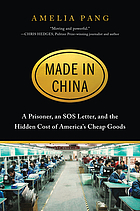
Made in China: a Prisoner, an S.O.S. Letter, and the Hidden Cost of America's Cheap Goods.


From my review: "This is a moving book that draws you in. It tugs at the heart at times. I will add it may not be for some sensitive readers, but I think as many people as possible need to read it, more so if it makes them uncomfortable."


 The Playbook: How to Deny Science, Sell Lies, and Make a Killing in the Corporate World.


 Gangsters Vs. Nazis: How Jewish Mobsters Battled Nazis in Wartime America.


From my review: "This is a book about a part of U.S. history that few people may know about. Yes, the U.S. had a Nazi past (you could argue it still does have a Nazi and fascist present), which many in the U.S. often ignore. Thus this is a must read. It is a book that reveals a part of U.S. history mostly forgotten until now."


 The King of Confidence: a Tale of Utopian Dreamers, Frontier Schemers, True Believers, False Prophets, and the Murder of an American Monarch.


From my review: "This book is not just a biography. It is a well written history of the United States at the time through the lens of James Strang's life. You are bound to learn new things and/or see them in a different light from reading this book."


 The Library: a Fragile History.

From my review: "This book aims to be a history of libraries from antiquity to the modern era. It is not just about libraries. It is also about books, collectors, book sellers, a lot of wealthy people, and folks who had the title of librarian, whether they deserved it or not."


 Star Wars Year by Year: a Visual History.

From my review: "This is another excellent coffee table book from DK Publishing.  The book looks at the history of Star Wars from it development in the 1960s to The Mandalorian. It covers from 1914-1972, before Star Wars, to 2021. "


 Allow Me to Retort: a Black Guy's Guide to the Constitution.

 From my review: "If you are stuck having to argue with some Republican/conservative about the 'greatness' of the document, this book explains exactly why they are wrong most if not all of the time. So read this book and keep it handy. "


Monday, July 11, 2022

Book Review: The Book of Pslams

David Javermaum, The Book of Pslams: 97 Diatribes on Humanity's Total Failure. New York: Simon and Schuster, 2021. ISBN: 9781982176020.
 
Genre: humor
Subgenre: social media, satire, religion
Format: e-book galley
Source: NetGalley 

 
This is basically one of those books where the author-- a blogger, a social media personality, an influencer, etc.-- managed to get a book deal based on what they do online. Books like these are rarely memorable, and this one is no exception. 

The author of @TheTweetOfGod on Twitter offers 97 diatribes and takes from a snarky divine point of view. If God was snarky, a bit of an asshole (OK, possibly a big asshole), and a bit of a misanthrope, this could be the book he would write. Along for the ride are his son Jesus, who updates some of his preaching, and the Holy Spirit. No topic is safe as the author takes on Trump, COVID-19, racism, abortion, math, evolution, and even the meaning of life. 

The 97 pslams have various styles. Some keep to the style of psalms. Others are poems, and others are parodies of famous songs. The humor varies. A few of the pslams are amusing, but many of them are not. A few may be a bit too long, a case of stretching the joke longer than it should go. Still, I did find a few favorites: 

  • Pslam 16: "Treasure in Heaven" where Jesus speaks socialism and nags televangelists. 
  • Pslam 21: :Clickbait" where you get Bible stories as clickbait headlines. This works pretty well, with some repetition of certain lines. 
  • Pslam 49: "Cliches: True or False." 

Overall, the book is OK. What works well as short, pithy bits of humor on Twitter does not work as well when stretched into a full book. Some passages do feel a more like filler to make the page quota. 

I'd consider this highly optional for public libraries, and if it is a public library in a conservative area I would avoid it. This is not humor many conservative Christians will appreciate. For everyone else, your mileage may vary. Not recommended for academic libraries; I would not purchase for the library. This is a title to borrow if you must. 

2 out of 5 stars.

Qualifies for the following 2022 Reading Challenge: 


Friday, February 07, 2020

Booknote: Get Capone

Johnathan Eig, Get Capone: the secret plot that captured America's most wanted gangster. New York: Simon and Schuster, 2010.  ISBN: 978-1-4165-8060-7.

Genre: history, biography
Subgenre: crime, mobsters, United States
Format: paperback
Source: Berea branch of the Madison County (KY) Public Library.

This book took me a while to read, in part because Eig packs a lot of material and a lot of research into the book. For some readers, it may be a lot. It worked for me.

If all you know about Al Capone is from movies or stories, then this book may be revealing. The great story is that Al Capone was brought down by The Untouchables. With extensive research, Eig shows that is not true. Along the way, we get a biography of Capone with depth and a good look at this times, mainly the Roaring 20's and Prohibition, including topics such as society and politics of the time.

What I found fascinating is how Capone was able to operate with impunity for the most part because so many people were willing to subvert Prohibition. Puritans in the U.S. managed to shove that law down the country's throat, an unpopular law among regular people, resulting in people being very willing to break said law and for men like Capone to make fortunes. Don't get me wrong; Capone was good at what he did, but Prohibition basically gave him opportunity on silver platter, and he made the most of it. So did others, some known, some less so. Capone was able to bribe and corrupt Chicago and others with ease because the U.S. wanted to keep on drinking. Even President Herbert Hoover, who wanted to uphold the law, did so mainly out of (misguided) principle; he knew the law was a failure.

As I mentioned, the book looks at Capone and his times. We get a look at Chicago and its politics. We get various points of view from criminals as well as law enforcement, even the President of the United States. To be honest, by the way, Herbert Hoover was probably way too obsessed with Capone at a time when he probably should have been paying attention to the bad economy and suffering caused by the Great Depression. Overall, everyone who wanted booze could get it, knew where to get it, and/or took a chance to make it themselves.

Eig discusses how he did his research in the book too. He notes that "I've relied as much as possible on primary materials: interviews, newspaper articles, government documents, and books from Capone's own time. Nothing in these pages is invented or embellished" (405).

Overall, I found the book interesting to read as it provides not just a biography of Capone but a good look at the U.S. and Chicago history and culture of the time. Readers who enjoy the true crime and crime history genres will likely enjoy this. Readers interested in early 20th century U.S. history may like it as well. In the end, I really liked it.

4 out of 5 stars.

* * * * * 

Additional reading notes:

Why bootleggers were able to succeed:

"Still, the key to success for bootleggers boiled down the public's thirst. From the first day of Prohibition, huge numbers of Americans resented the law. They felt their freedom had been stripped by religious fanatics. Even when violence in the bootlegging business erupted, the gangsters who controlled the booze  were never entirely blamed. Most Americans seemed to understand that these criminals were like boils-- irritating yes, but also a symptom of a deeper and more persistent disease" (14). 

Capone was into workplace "wellness" before wellness was a thing:

"At the Metropole, Capone set up a gymnasium with punching bags, horizontal bars, trapezes, rowing machines, and more, and expected his employees to use the equipment. It was yet another example of Capone's progressive thinking. He understood that employees who took the time to fortify their bodies and mind would be more efficient killers" (84). 

Note we are not saying Capone himself used the gym, but then again, he delegated the actual killing work, and he needed his workers in good shape. Still pretty visionary.

Capone loved the arts:

"By all accounts, Capone was a lover of the arts and a benefactor of musicians. He especially loved the opera, which he usually attended with bodyguards seated all around him" (110). 

Eig often provides details like the above which humanize Capone. Some reviewers say this biography glamorizes Capone and makes him a sympathetic figure. In reality, Capone was a glamorous figure; he did rise to become a celebrity, and a popular one at that. Even his opponents could not deny that. But the real picture is that Capone, criminal and violent as he was, was also a complex human being, and that includes being a patron of the arts. Plus, let's be perfectly honest: a good number of entertainers, musicians, and artists might have been out of work in the 20's and 30's were it not for gigs in speakeasies controlled by Capone. It is not all black and white. Eig even writes,

"Almost every musician and comedian who performed in Chicago in the 1920s had a story about Capone. Some of them may have even been true" (110). 


Friday, September 16, 2016

Book Review: Casino

Nicholas Pileggi, Casino: Love and Honor in Las Vegas. New York: Simon & Schuster, 1995. ISBN: 0-684-80832-3.

Genre: nonfiction
Subgenre: true crime, mobsters, Mafia, casinos, gambling, Las Vegas
Format: hardcover
Source: Hutchins Library at Berea College


This is the book that is the basis for the film of the same title where Robert De Niro plays Ace Rothstein. Ace Rothstein is the name they used in lieu of the real Lefty Rosenthal. In fact, the film changes the names of the characters from the book, in some cases only slightly. If you already saw the film and then you read the book as I did, you will recognize characters right away. You might even find yourself seeing the book characters as the authors who portrayed them now and then. It can be interesting to see the changes from book to film.

The book itself is pretty good, but you can tell the film makers trimmed a lot of it to make the film. The book is very detailed when it comes to how casinos in Las Vegas operated back in the 1970s and the extensive corruption behind those operations. If you are a reader who likes to learn how the machinery ran, this is a book for you as it goes into a lot of the small details that made the casino run. In addition, unlike the movie, the book goes into Lefty's background and rise. In the film, he is pretty much at the top of his game and ready to run the casino. In the book, we get to see a young Lefty Rosenthal learning his gambling and handicapping craft, including some early mistakes, mistakes that taught him valuable lessons. He was young once, and he had to learn a few things the hard way.

The book's narrative structure is in small segments. It's kind of like those interviews they do in some reality shows between the show segments where contestants look back on the scenes the audience just saw. In the book, points of view shift so one moment we get Lefty, another we may get Tony Spilotro, and another we get one of the FBI agents who had them under surveillance. The narrative moves back and forth between points of view, which allows the reader to get a broader picture of the events.

While the book has interesting moments, it also gives a lot of minutiae at times. The film makes did take a lot of that out to make a relatively tight film. There are some parts in the book that can be fairly slow to read through.

In the end, though the book's subtitle is "Love and Honor in Las Vegas," there is no really much love. Lefty marries Geri out of naive love, but she did it for money and convenience. As for honor, there really is not any honor among thieves, and they were all thieves in one form or another; even some of the members of law enforcement were corrupt, and the Las Vegas Gaming Commission was often a racket of its own. In the end, greed, a lack of discipline, a desire for the spotlight when discretion was essential, and just some really stupid mistakes drove the mobsters of paradise.

Overall I liked this book. If you enjoyed the film, you will likely enjoy the book. Do keep in mind that the films has the essence of the book. You see a lot more in the book, which can be a plus or a minus.

3 out of 5 stars.

* * * * * 

Some additional reading notes:

Geri really made her living as a hustler, hustling chips in casinos and partying with high rollers, making $300K to $500K a year. She had a "real job" as a dancer in one of the casinos for $20K a year, but that was to keep her work permit to show she was "gainfully employed." Much of the hustle included "taking care of people," in other words, slip money here, bribe there, to keep the wheels turning:

"Las Vegas is a city of kickbacks. A desert city of greased palms. A place where a $20 bill can buy approval, a $100 bill adulation, and a $1,000 bill canonization" (80). 

Then again, you could think positive in terms that crime can and does create jobs:

"All booming industries create jobs, and the Spilotro operation was no exception. Within a year Spilotro was providing work not just for his own crew but for dozens of law enforcement officers who tailed him, bugged him, and attempted to ensnare him in elaborate stings" (148). 

In the end, just about everybody stole. Carl Thomas, another character in the book, puts it like this:

"He spoke philosophically about how the men you trust to steal for you are bound to steal something for themselves" (265). 


* * * * * 

This book qualifies for the following 2016 Reading Challenges: